Best ERP Systems for Small Businesses in 2026
Introduction: Navigating the Digital Landscape with ERP for Small Businesses
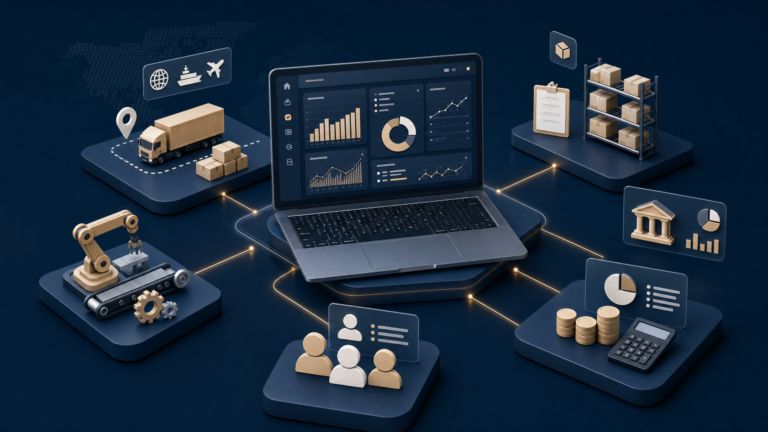
In today’s rapidly evolving business environment, small businesses face unique challenges in managing their operations efficiently and effectively. From juggling finances and inventory to overseeing customer relationships and human resources, the complexities can quickly become overwhelming. This is where Enterprise Resource Planning (ERP) systems come into play. An ERP system integrates various business processes and functions into a single, unified platform, providing a holistic view of operations and streamlining workflows. For small businesses, adopting the right ERP solution can be a game-changer, enabling them to compete with larger enterprises by optimizing resource allocation, improving decision-making, and fostering sustainable growth.
Without an integrated system, small businesses often rely on disparate tools and manual processes, leading to data silos, inefficiencies, and increased operational costs. This fragmentation can hinder scalability, make accurate forecasting difficult, and ultimately impede growth. The goal of this article is to guide small business owners through the landscape of ERP solutions in 2026, highlighting some of the best systems tailored to their specific needs. We will delve into their features, benefits, and pricing to help you make an informed decision that propels your business forward.
1. Odoo: The Flexible Open-Source Solution
Overview
Odoo stands out as a highly modular and cost-effective open-source ERP platform, making it an attractive option for small businesses and startups operating on a limited budget. Its unique pricing model, which includes a free tier for a single application and affordable paid plans for unlimited apps, allows businesses to scale their ERP capabilities as needed without significant upfront investment [1]. Odoo’s flexibility is a major draw, enabling users to select and pay only for the modules they require, from finance and sales to HR and supply chain management.
Key Features
- Comprehensive Module Ecosystem: Offers a wide range of applications covering finance, sales, marketing, HR, websites, services, supply chain, and productivity.
- Open-Source Flexibility: Allows for extensive customization and integration with other tools, though some out-of-the-box functionalities might require additional development.
- User-Friendly Interface: Designed to be intuitive, facilitating easier adoption for small teams.
Pros & Cons
- Pros: Affordable pricing, highly customizable, modular approach, strong community support.
- Cons: May require additional development for specific functionalities, potential learning curve for advanced customizations.
Pricing Indication
Paid plans start at approximately $24.90 per user per month, billed annually. A free tier is available for one application [1].
2. Microsoft Dynamics 365 Business Central: Seamless Integration for Microsoft Ecosystem Users
Overview
Microsoft Dynamics 365 Business Central is a cloud-based ERP solution specifically designed for small and mid-sized businesses that are already integrated into the Microsoft ecosystem. It offers deep native integration with popular Microsoft tools like Outlook, Teams, Excel, and SharePoint, providing a familiar user experience that can significantly reduce training time and accelerate user adoption [2]. This comprehensive solution manages everything from inventory and financial forecasting to project accounting and customer relationship management.
Key Features
- Deep Microsoft Integration: Seamlessly connects with Office 365, Power Platform, and Azure cloud services.
- Comprehensive Functionality: Covers financial management, supply chain, commerce, project operations, HR, sales, and customer service.
- Familiar User Interface: Reduces friction for users accustomed to Microsoft products, leading to higher adoption rates.
Pros & Cons
- Pros: Excellent integration with Microsoft products, robust functionality, fast deployment, scalable.
- Cons: Modular approach can increase cost and complexity, less suitable for highly complex manufacturing or global operations.
Pricing Indication
Pricing ranges from $70–$175 per user per month. The 5-year Total Cost of Ownership (TCO) is estimated between $85,000–$170,000 [2].
3. Acumatica Cloud ERP: Scalability with Unlimited Users
Overview
Acumatica Cloud ERP is a modern, cloud-based system known for its unique consumption-based pricing model, which allows for an unlimited number of users. This makes it particularly appealing for small businesses with larger teams or those anticipating significant growth, as it eliminates the per-user licensing costs that can quickly escalate with other ERP solutions [2]. Acumatica offers robust functionality across various industries, emphasizing growth, scalability, and operational visibility.
Key Features
- Unlimited User Licensing: Pricing is based on resource consumption rather than the number of users, offering cost savings for growing teams.
- Open API Architecture: Facilitates custom integrations and extensions, providing flexibility for unique business needs.
- Strong Industry-Specific Editions: Offers tailored solutions for manufacturing, distribution, and other sectors.
Pros & Cons
- Pros: Flexible pricing model, strong financial and distribution features, good for growing mid-market companies.
- Cons: Smaller partner network compared to larger vendors, less suitable for very large enterprises with complex international requirements.
Pricing Indication
Base pricing starts at approximately $1,800 per month (unlimited users). The 5-year TCO is estimated between $115,000–$235,000 [2].
4. Oracle NetSuite ERP: The Cloud-Native Powerhouse
Overview
Oracle NetSuite is a market-leading, cloud-native ERP platform that provides a comprehensive, all-in-one business management suite. It integrates financial management, inventory management, order management, and e-commerce capabilities onto a single platform, making it ideal for mid-market companies and startups looking for a solution that can scale with their growth [1] [3]. NetSuite is highly customizable and boasts a large ecosystem of third-party integrations.
Key Features
- True Cloud ERP Architecture: Offers automatic updates and eliminates the need for infrastructure maintenance.
- Unified Business Management: Combines ERP, CRM, and e-commerce functionalities.
- Advanced Financial Management: Includes robust revenue recognition features.
Pros & Cons
- Pros: Highly customizable, broad functionality, strong for e-commerce, scalable.
- Cons: Can be complex to configure, potentially expensive at scale, customization may require expert consultants.
Pricing Indication
Annual license fees; contact for a quote. The 5-year TCO is estimated between $235,000–$470,000 [2].
5. SAP Business One: Tailored for Small and Mid-sized Enterprises
Overview
While SAP S/4HANA caters to large enterprises, SAP also offers solutions specifically designed for small and mid-sized businesses. SAP Business One is a comprehensive, integrated ERP solution that helps small businesses manage their entire company, from accounting and financials, purchasing, inventory, sales, and customer relationships to project management and operations. It provides a clear and accurate picture of the business, enabling better decision-making and faster growth.
Key Features
- Integrated Business Management: Covers core business functions like financials, sales, purchasing, inventory, and CRM.
- Real-time Insights: Provides up-to-date information for better business intelligence.
- Industry-Specific Functionality: Can be customized and extended to meet specific industry needs.
Pros & Cons
- Pros: Comprehensive functionality for SMBs, strong reporting and analytics, scalable.
- Cons: Can be more expensive than other SMB-focused solutions, implementation can be complex.
Pricing Indication
Pricing varies based on modules and users; contact SAP or a partner for a quote.
Factors to Consider When Choosing an ERP System for Your Small Business
Selecting the right ERP system is a significant decision that can impact your business for years to come. Here are crucial factors to consider:
Scalability
Your chosen ERP system should be able to grow with your business. Consider whether it can handle increased transaction volumes, additional users, and new functionalities as your company expands. Cloud-based solutions often offer greater scalability and flexibility.
Integration Capabilities
Assess how well the ERP system integrates with your existing software and tools, such as CRM, e-commerce platforms, and specialized industry applications. Seamless integration prevents data silos and ensures a unified flow of information across your organization.
Total Cost of Ownership (TCO)
Beyond initial licensing or subscription fees, consider the total cost of ownership, which includes implementation, customization, training, maintenance, and ongoing support. Some systems might have lower upfront costs but higher long-term expenses due to complex customizations or extensive support needs [2].
Ease of Use and Implementation
A user-friendly interface and a straightforward implementation process are vital for small businesses with limited IT resources. A system that is difficult to learn or implement can lead to low user adoption and negate the benefits of the ERP. Look for solutions with quick deployment times and intuitive designs [2].
Industry-Specific Needs
Some industries have unique operational requirements. If your business operates in a niche market, consider ERP systems that offer industry-specific functionalities or can be easily customized to meet those needs. Solutions like Epicor and Infor CloudSuite, for example, specialize in providing tailored systems for various sectors [1] [3].
Conclusion: Empowering Your Small Business with the Right ERP
Choosing the best ERP system for your small business in 2026 is a strategic investment that can significantly enhance operational efficiency, improve decision-making, and support long-term growth. The market offers a diverse range of solutions, from the highly flexible and affordable Odoo to the deeply integrated Microsoft Dynamics 365 Business Central, the scalable Acumatica, the comprehensive Oracle NetSuite, and the SMB-focused SAP Business One.
By carefully evaluating your business’s specific needs, considering factors like scalability, integration, total cost of ownership, ease of use, and industry-specific requirements, you can select an ERP system that aligns perfectly with your strategic objectives. The right ERP solution will not only streamline your current operations but also provide the foundation for future expansion and success in a competitive marketplace.
For more detailed comparisons and expert insights into ERP systems, visit SaaSSync Pro to explore comprehensive reviews and find the perfect fit for your business.