How to Sell SaaS Add-Ons with Shopify Checkout
How to Sell SaaS Add-Ons with Shopify Checkout
Expanding a software-as-a-service business often requires offering modular features, professional services, or hardware accessories alongside core digital subscriptions. While traditional subscription management platforms handle recurring billing efficiently, many B2B software companies evaluate merchant-of-record models or specialized e-commerce engines to streamline transaction processing, global tax compliance, and localized checkout experiences. Leveraging a robust transaction infrastructure for ancillary items allows growing software enterprises to capture higher average order value without overhauling their primary billing architecture. Integrating digital cart workflows with existing customer management systems ensures that purchasers receive immediate entitlement activation upon successful payment completion.
Navigating the technical requirements of combining recurring software licenses with one-time or recurring add-ons demands careful orchestration across merchant portals, webhooks, and customer portals. Software buyers expect a seamless purchasing experience where add-on purchases immediately reflect in their active account profile without manual intervention from support teams. Organizations must balance the rigidity of standard e-commerce shopping carts with the dynamic nature of software entitlements, license keys, and seat-based allocations. Establishing a clear operational framework ensures that transactional data flows cleanly between the checkout interface, customer relationship management databases, and product provisioning engines.
Understanding the Architecture of SaaS Add-On Transactions
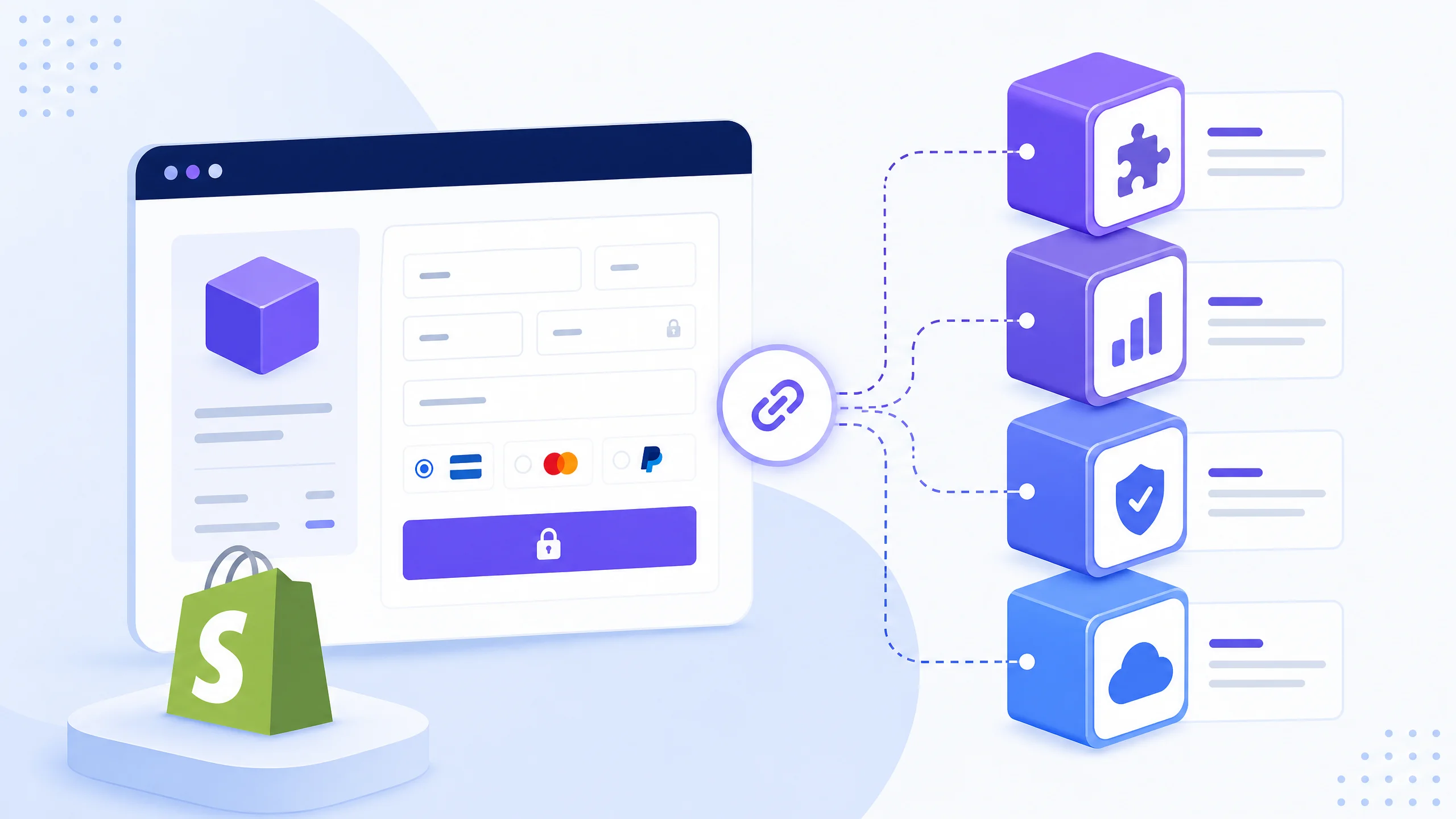
Implementing an external checkout engine for software add-ons requires a thorough understanding of how customer data and order events travel through modern web architectures. When a customer initiates a purchase for an additional module, professional service package, or hardware token, the checkout platform initiates a secure transaction session. Upon successful authorization, webhook notifications dispatch order metadata to backend servers. These backend microservices parse the payload, identify the corresponding tenant account, and trigger the appropriate entitlement provisioning workflow.
| Evaluation Criterion | Shopify Checkout Integration | Native Billing Platform Checkout | Custom API Checkout Build |
|---|---|---|---|
| Global Tax Compliance | Automated VAT and sales tax calculation via built-in engines | Handled through integrated merchant-of-record features | Requires third-party tax service integrations and maintenance |
| Setup Speed | Rapid deployment using pre-built checkout UI components | Immediate integration with existing subscription database | Extended development timeline and continuous API maintenance |
| Customization Flexibility | Moderate styling via checkout extensions and app plugins | High customization for recurring billing logic and trial flows | Absolute flexibility across user experience and database schema |
| Provisioning Complexity | Requires webhook listeners to sync orders with user accounts | Native synchronization with subscription and billing records | Custom backend development required for all event triggers |
Maintaining data integrity across disparate systems remains a primary challenge for engineering and revenue operations teams. If a webhook payload fails due to network timeouts or server errors, the purchasing customer might experience a delay in accessing their purchased software capabilities. Implementing robust retry logic, idempotency keys, and asynchronous queue processing prevents missed entitlement grants and reduces support ticket volume. Furthermore, reconciling financial records between the e-commerce ledger and the core accounting software ensures accurate revenue recognition and simplified financial audits.
Structuring Product Catalogs and Offer Definitions
Designing a clean product catalog within an e-commerce platform involves mapping physical or digital SKU definitions to software feature flags. Each add-on must be categorized correctly to dictate whether the item represents a recurring subscription fee, a consumption-based credit pack, or a one-time professional onboarding service. Clear product nomenclature prevents customer confusion during checkout and simplifies downstream reporting for finance and product teams. When configuring variants, administrators must define appropriate pricing tiers, billing intervals, and currency conversions to support international clientele.
Beyond basic catalog setup, organizations should establish clear bundling strategies that encourage customers to add complementary services during the initial purchase or renewal cycle. Cross-selling priority support, advanced security modules, or training webinars directly inside the checkout funnel increases monetization efficiency. However, catalog complexity increases rapidly as discount rules, promotional codes, and tiered volume pricing are introduced. Maintaining a centralized product information management system helps prevent discrepancies between what is displayed on marketing landing pages and what is processed by the payment gateway.
Automating Access Provisioning and License Delivery
The ultimate measure of a successful software transaction workflow is the speed and accuracy with which a customer gains access to their purchase. Unlike physical goods that require fulfillment warehouses and shipping carriers, digital add-ons demand instantaneous electronic fulfillment. When an order reaches a completed status, the integration layer must instantly verify the customer’s identity, locate their existing user profile or organization tenant, and update the associated access permissions. For seat-based add-ons, this means incrementing the available license count within the application dashboard without requiring the user to log out and log back in.
Handling edge cases, such as failed credit card renewals, chargebacks, or administrative cancellations, requires automated reversal workflows. If a customer disputes a transaction or if a renewal payment declines, the provisioning engine should gracefully downgrade the account or suspend the specific add-on feature after an appropriate grace period. Communicating these status changes through automated transactional emails keeps the customer informed and prompts them to update their payment method before service disruption occurs.
Managing Global Tax, Compliance, and Localization
Selling digital software add-ons across international borders introduces complex regulatory obligations, including value-added tax collection, digital services taxes, and localized currency presentation. Relying on an advanced checkout infrastructure helps organizations navigate these regulatory burdens by automatically determining the buyer’s geographic location, calculating the exact tax rate applicable to digital goods, and generating compliant invoices. This automation shields growing software companies from the administrative overhead of registering for tax collection in dozens of distinct jurisdictions.
In addition to tax compliance, localization extends to language translation, local payment method support, and transparent currency exchange rates. B2B buyers in Europe, Asia-Pacific, and the Americas often prefer completing transactions using regional payment rails or trusted local wallets. Offering familiar payment options at checkout reduces cart abandonment rates and fosters greater trust between the international buyer and the software vendor. Finance teams must reconcile these multi-currency transactions against base reporting currencies while accounting for foreign exchange fluctuations and gateway processing fees.
How to Choose Your Transaction Infrastructure
Selecting the optimal checkout and billing architecture depends on your company’s stage of growth, technical resources, and product distribution model. Early-stage teams often benefit from utilizing merchant-of-record solutions that absorb global tax liability and merchant compliance responsibilities. Conversely, established scale-ups with dedicated engineering capacity may prefer modular setups combining specialized billing engines with customizable storefront checkouts.
- Assess Technical Bandwidth: Evaluate whether your engineering team has the capacity to build and maintain custom webhook listeners, API integrations, and ongoing tax compliance rules.
- Analyze Buyer Geography: Determine whether your customer base is concentrated in a single domestic market or distributed globally across jurisdictions with complex digital tax laws.
- Review Product Complexity: Consider whether your catalog consists of straightforward recurring subscriptions or intricate combinations of seats, usage metrics, and professional services.
- Calculate Total Cost of Ownership: Compare percentage-based transaction fees, fixed subscription costs for software tools, and internal maintenance overhead before committing to a platform.
Editorial note: Software pricing tiers, transaction fee percentages, and platform feature sets are subject to change. Organizations should check the vendor’s current pricing page and documentation portal before finalizing architectural decisions or signing agreements.
Frequently Asked Questions
Can Shopify Checkout be used exclusively for digital software add-ons without selling physical products?
Yes, digital product delivery apps and custom webhook integrations enable merchants to utilize e-commerce checkout platforms purely for selling software licenses, digital modules, and professional services without managing physical inventory or fulfillment warehouses.
How are customer accounts synchronized between the e-commerce checkout and the core SaaS application?
Account synchronization is typically achieved using secure webhook notifications or server-to-server API calls. When an order event fires, backend middleware captures the customer email or tenant identifier and updates the internal database to provision the purchased features.
What are the main advantages of using a merchant-of-record model versus a direct payment gateway?
A merchant-of-record acts as the reseller of your digital goods, assuming legal responsibility for global tax collection, invoicing compliance, fraud management, and chargeback handling, whereas a direct payment gateway simply processes credit card transactions while leaving tax and compliance burdens with your business.
Conclusion
Implementing a streamlined checkout experience for SaaS add-ons empowers software companies to maximize customer lifetime value and capture additional revenue streams with minimal friction. By carefully evaluating platform capabilities, establishing robust webhook provisioning workflows, and prioritizing global tax compliance, organizations can build a resilient revenue engine. Whether utilizing extensible e-commerce checkouts or dedicated recurring billing platforms, aligning your technical architecture with your commercial growth objectives ensures long-term operational scalability.