Best Ecommerce Platforms for SaaS Companies Selling Digital Products
Best Ecommerce Platforms for SaaS Companies Selling Digital Products
Modern software-as-a-service (SaaS) businesses frequently extend beyond traditional recurring subscription models to offer standalone digital products, downloadable add-ons, premium features, and professional services. Selecting the appropriate infrastructure to manage these transactions requires balancing frictionless buyer checkouts with complex backend logic such as global sales tax compliance, automated license provisioning, and recurring billing synchronization. Traditional e-commerce carts designed for physical goods often lack the developer APIs and subscription lifecycle management needed for software delivery. Consequently, SaaS operators must evaluate specialized commerce platforms built specifically to handle digital entitlements and global compliance [1].
Navigating the landscape of e-commerce solutions for software vendors involves assessing how each platform handles global merchant-of-record (MoR) responsibilities, checkout conversion optimization, and integration flexibility. Whether scaling a product-led growth motion or managing enterprise add-on catalogs, choosing the right foundation directly impacts customer acquisition cost and operational overhead. This comprehensive guide examines the leading e-commerce platforms designed for SaaS digital products, analyzing their core architecture, buyer experience, security protocols, and operational trade-offs to help executive teams make informed infrastructure decisions.
Evaluating Top E-commerce Platforms for SaaS Digital Products
When evaluating software commerce solutions, decision-makers must distinguish between standard shopping carts, merchant-of-record services, and developer-first billing APIs. The optimal choice depends heavily on an organization’s internal compliance resources and global expansion strategy. Platforms like Paddle and Lemon Squeezy act as merchants of record, assuming legal responsibility for tax collection, fraud management, and regulatory adherence, whereas developer-centric APIs like Stripe Billing provide granular control over custom checkout flows [2] [3].
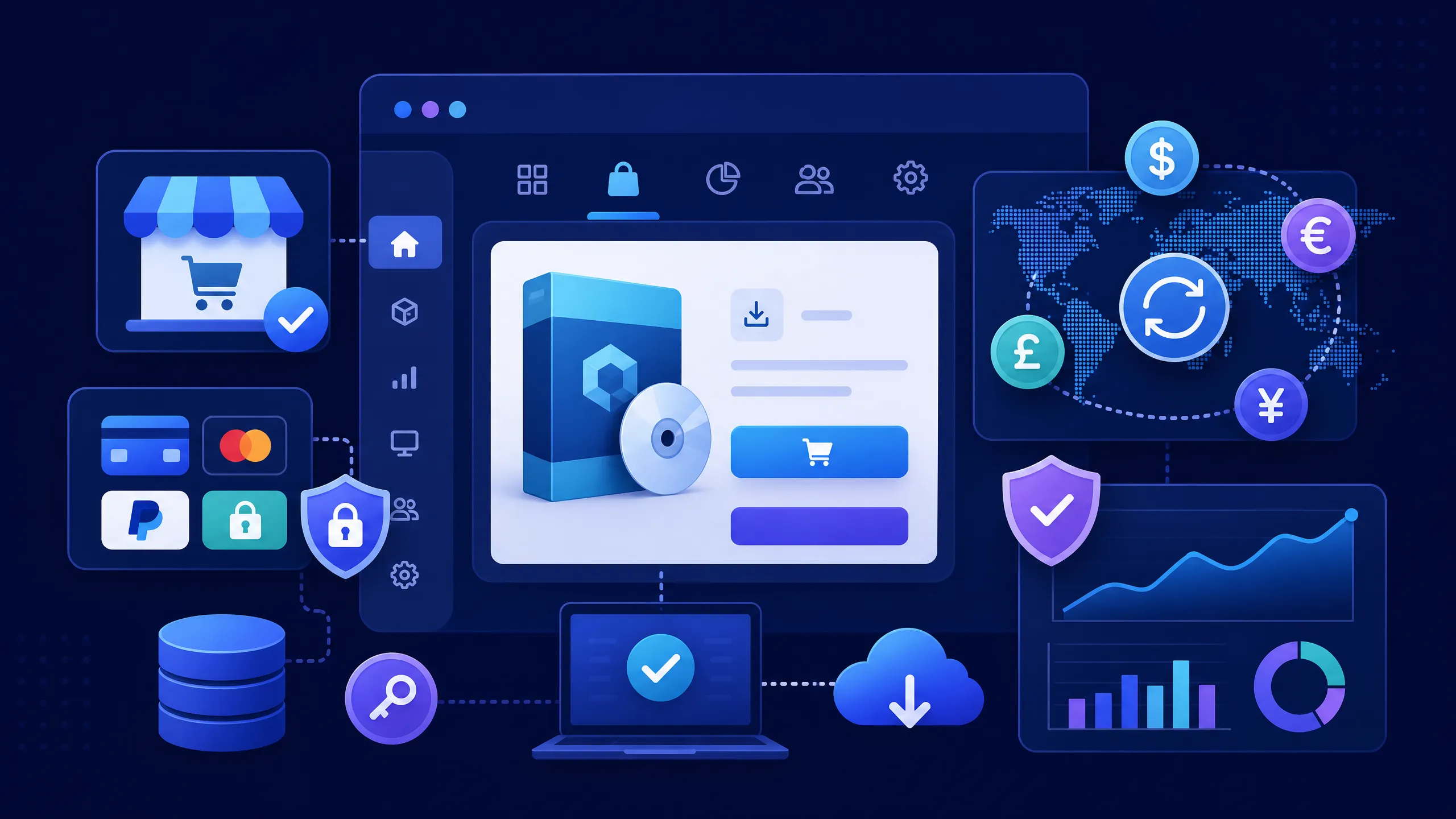
Organizations selling digital assets alongside core subscriptions benefit from platforms that support instant license key generation, secure software delivery, and flexible fulfillment triggers. Furthermore, modern SaaS buyers expect localized payment methods, transparent multi-currency conversion, and streamlined invoice generation. Reviewing platform capabilities across checkout performance, developer ergonomics, and compliance automation ensures long-term scalability without incurring unexpected technical debt [4].
Merchant-of-Record Platforms: Paddle and Lemon Squeezy
Merchant-of-record platforms offer an all-in-one operational model where the vendor legally resells the software to the end customer. This approach eliminates the immense administrative burden of registering for international value-added tax (VAT) and goods and services tax (GST) across dozens of disparate jurisdictions. Paddle and Lemon Squeezy automate global tax calculation, invoicing, chargeback management, and compliance reporting out of the box, making them highly attractive for early-stage and mid-market SaaS companies expanding internationally [2] [3].
Beyond tax compliance, these platforms provide robust checkout overlays, subscription management tools, and affiliate tracking modules. Integration is typically achieved through pre-built UI components or lightweight client-side scripts that embed secure checkout modals directly into the SaaS application. While transaction fees are higher than traditional payment gateways due to the bundled compliance services, the reduction in legal overhead and financial exposure often outweighs the cost for growing software businesses [1] [5].
Developer-Centric Billing and Checkout: Stripe and Chargebee
For SaaS companies requiring deep customization over the checkout experience and financial ledger, developer-centric platforms like Stripe Billing and Chargebee provide unmatched flexibility. These tools allow product teams to construct bespoke pricing tiers, handle metered usage billing, and integrate complex promotional logic directly into their application workflows. Stripe functions as a payment gateway and merchant platform, requiring the business to manage its own tax registration or integrate third-party tax engines such as Stripe Tax [6].
Chargebee sits on top of payment gateways like Stripe or Adyen, offering advanced subscription management, dunning workflows, and revenue recognition reporting. This architecture suits scaling SaaS companies with dedicated engineering resources who need granular control over customer data, webhook event handling, and enterprise invoicing workflows. However, engineering teams must invest ongoing maintenance effort to ensure continuous compliance with evolving international tax laws and localized consumer protection regulations [2] [6].
Fraud Prevention and Security Considerations in Digital Commerce
Selling digital products online presents unique security challenges, including stolen credit cards, credential stuffing, and digital piracy. Merchant-of-record platforms incorporate advanced machine learning fraud detection algorithms that analyze transaction velocity, device fingerprints, and geolocation data to block fraudulent purchases before software delivery occurs. Furthermore, compliance with Payment Card Industry Data Security Standards (PCI-DSS) is fully managed by these platforms, shielding software vendors from direct exposure to sensitive cardholder data [1] [4].
When utilizing developer-centric payment gateways, security implementation falls squarely on the internal engineering team. Developers must ensure that tokenization is properly configured, webhook endpoints are cryptographically verified, and customer data privacy regulations such as GDPR and CCPA are strictly adhered to. Implementing robust audit logs and role-based access controls within your billing dashboard prevents unauthorized modifications to subscription tiers and ensures financial data integrity [5] [6].
Feature Comparison of SaaS Ecommerce Solutions
| Platform | Primary Architecture | Global Tax & Compliance | Checkout Experience | Best Suited For |
|---|---|---|---|---|
| Paddle | Merchant of Record | Fully Managed (MoR) | Embedded Modals & Hosted Pages | Global SaaS seeking zero tax liability |
| Lemon Squeezy | Merchant of Record | Fully Managed (MoR) | Optimized Checkout Overlays | Creators and digital product vendors |
| Stripe Billing | Payment Gateway & API | Requires Add-on (Stripe Tax) | Fully Customizable UI & API | High-customization SaaS & usage billing |
| Chargebee | Subscription Management | Integrates with Tax Engines | Hosted Pages & Custom Portals | Mid-market SaaS with complex billing |
The comparison table above highlights the fundamental architectural differences among leading SaaS commerce solutions. Organizations prioritizing speed-to-market and automated international compliance generally lean toward merchant-of-record models, whereas businesses with sophisticated usage-based pricing models or multi-entity accounting structures favor developer-first billing engines [1] [2].
How to Choose the Right Platform for Your Business
Selecting the ideal e-commerce platform for SaaS digital products requires a structured internal audit of your technical resources, geographical footprint, and financial operations. Begin by mapping out your target customer distribution; if a significant percentage of buyers reside in international markets with complex digital tax regimes, utilizing a merchant-of-record platform can save hundreds of hours in legal and accounting setup. Conversely, if your product relies heavily on dynamic, usage-based consumption metrics or custom enterprise contracting, a robust billing API infrastructure is essential [2] [6].
Next, evaluate your engineering capacity and internal workflow requirements. Implementing a merchant-of-record solution often requires minimal developer intervention, allowing product teams to focus on core software features rather than payment plumbing. However, if your go-to-market strategy involves intricate partner ecosystems, custom discounting rules, and direct ERP integrations, investing in a flexible subscription management platform ensures seamless data synchronization across your CRM and accounting systems [1] [5].
Frequently Asked Questions
What is the difference between a payment gateway and a merchant of record?
A payment gateway simply authorizes and processes credit card transactions, leaving the merchant legally responsible for collecting sales tax, managing fraud, and handling international compliance. A merchant of record (MoR) acts as the legal reseller of your software, meaning they assume full liability for global tax collection, invoicing, chargebacks, and regulatory compliance on every transaction [2] [3].
Can I sell physical merchandise alongside digital SaaS add-ons?
Yes, though platform suitability varies significantly. Merchant-of-record platforms are heavily optimized for digital goods, software licenses, and SaaS subscriptions. If your business model involves significant physical inventory or complex shipping logistics alongside digital add-ons, dedicated hybrid commerce platforms or specialized plugin architectures are typically required [1] [4].
How do these platforms handle software license key generation?
Most modern SaaS commerce platforms offer native integrations or webhook triggers that automatically generate license keys upon successful checkout completion. These keys can be instantly transmitted to the customer via confirmation emails or provisioned directly into the user account database through automated API calls [5] [6].
Conclusion
Choosing the right e-commerce platform for SaaS digital products is a critical strategic decision that influences global conversion rates, tax compliance exposure, and engineering velocity. Whether opting for the comprehensive tax abstraction of a merchant-of-record service like Paddle or the granular customization of Stripe Billing, software leaders must align their infrastructure choice with their long-term growth objectives. By carefully evaluating checkout performance, compliance automation, security protocols, and integration capabilities, SaaS businesses can build a resilient monetization engine capable of supporting sustainable global expansion [1] [2].
Editorial note: Software pricing, transaction fee structures, and feature sets change frequently. Always check the vendor’s current pricing page and official documentation before making purchasing or migration decisions.