How to Reduce Customer Support Tickets by 50% with Self-Service
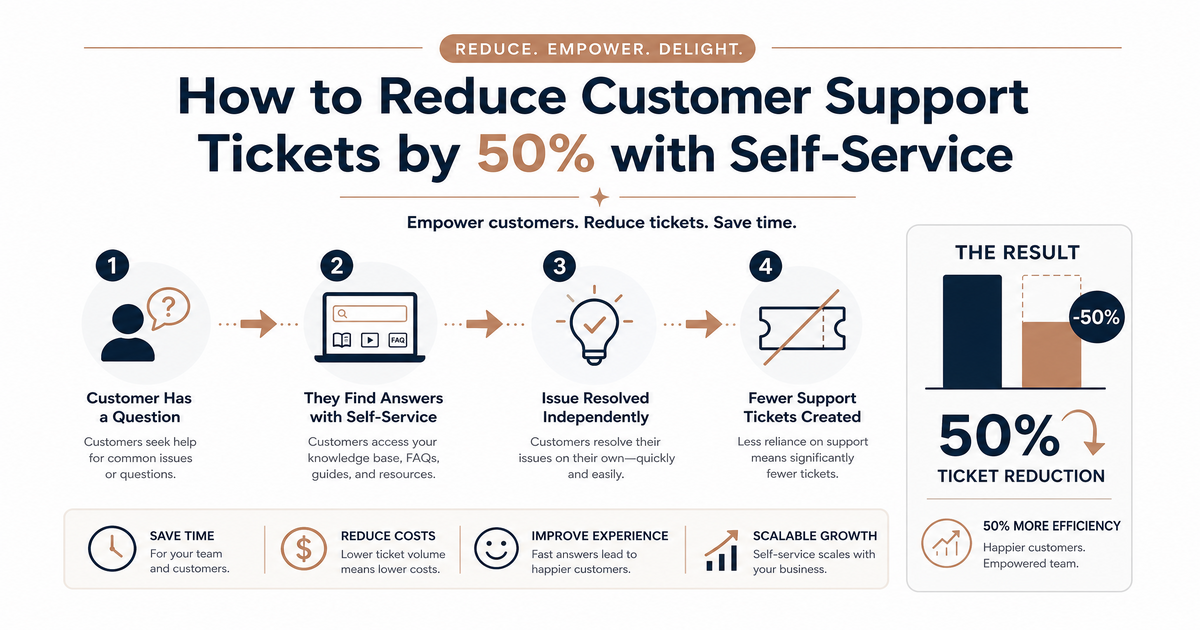
In today’s fast-paced business environment, customer support is a critical component of success. However, managing a high volume of support tickets can quickly become a drain on resources, impacting both operational efficiency and customer satisfaction. The good news is that many businesses are discovering the transformative power of self-service solutions. By empowering customers to find answers independently, companies can drastically reduce their support ticket volume, often by as much as 50% or more, leading to happier customers and a more streamlined support operation.
Understanding the Impact of High Customer Support Tickets
High customer support ticket volumes are more than just an inconvenience; they represent significant challenges that can ripple throughout an organization.
Costs and Inefficiencies
Every support ticket carries a cost. This includes the labor hours of support agents, the infrastructure required to manage support channels, and the time spent on repetitive queries that could otherwise be automated. When ticket volumes are consistently high, these costs escalate, eating into profit margins. Furthermore, a high volume often means longer wait times for customers, leading to a backlog that further strains resources and reduces agent efficiency. Agents may feel overwhelmed, leading to burnout and higher turnover rates, which in turn increases recruitment and training costs.
Customer Frustration and Churn
Customers today expect quick and easy resolutions to their problems. When they face long wait times, have to repeat information, or struggle to find answers, their frustration grows. This negative experience can severely damage customer loyalty and lead to increased churn. In an era where customer experience is a key differentiator, failing to provide efficient support can directly impact a company’s reputation and bottom line. A study by Microsoft found that 90% of consumers expect brands to offer a self-service portal, indicating a strong preference for independent problem-solving.
The Power of Self-Service: A Game Changer for Support
Self-service support is not just a trend; it’s a fundamental shift in how businesses approach customer care. It puts control back into the hands of the customer, offering immediate access to information and solutions.
What is Self-Service Support?
Self-service support refers to any resource or tool that allows customers to resolve their issues or find information without direct interaction with a customer support agent. This can include a wide range of solutions, from comprehensive knowledge bases and FAQ sections to interactive chatbots and vibrant community forums. The core idea is to provide readily available, easy-to-understand information that addresses common queries and problems.
Key Benefits of Implementing Self-Service
- Reduced Ticket Volume: The most direct benefit is a significant drop in incoming support tickets, especially for common and repetitive issues. This frees up human agents to focus on more complex or sensitive customer problems.
- Improved Customer Satisfaction: Customers appreciate the ability to find answers quickly and at their convenience, without waiting for an agent. This instant gratification leads to higher satisfaction levels.
- 24/7 Availability: Self-service resources are available around the clock, regardless of business hours or geographical location, providing continuous support to a global customer base.
- Cost Savings: By deflecting tickets, businesses can reduce the need for a large support team, leading to substantial cost savings in staffing and operational overhead.
- Enhanced Agent Productivity: With fewer routine inquiries, support agents can dedicate their time to more challenging cases, improving their expertise and job satisfaction.
- Consistent Information: Self-service platforms ensure that customers receive consistent and accurate information, reducing the chances of miscommunication or conflicting advice.
Step-by-Step Guide to Reducing Tickets with Self-Service
Implementing an effective self-service strategy requires a thoughtful and structured approach. Here’s a step-by-step guide to help you achieve a 50% reduction in customer support tickets.
Step 1: Analyze Your Current Support Data
Before you can improve, you need to understand your current state. Dive deep into your existing support ticket data. Identify:
- Common Issues: What are the most frequent questions or problems customers contact you about?
- Peak Times: When do ticket volumes spike?
- Resolution Times: How long does it typically take to resolve different types of issues?
- Channels Used: Which channels (email, chat, phone) are customers using most often?
Tools like Zendesk, Freshdesk, or Salesforce Service Cloud can provide invaluable insights into these metrics. This analysis will form the foundation for your self-service content strategy.
Step 2: Identify Common Issues and FAQs
Based on your data analysis, create a comprehensive list of frequently asked questions and common issues. Prioritize those that are high-volume and relatively straightforward to resolve. These are the prime candidates for self-service content. Think about the customer journey and anticipate questions at each stage, from onboarding to advanced troubleshooting.
Step 3: Choose the Right Self-Service Tools
Selecting the appropriate tools is crucial for the success of your self-service initiative. Consider the following options:
- Knowledge Base Software: A centralized repository of articles, guides, and tutorials. Platforms like Zendesk Guide, Freshdesk Knowledge Base, or Intercom Articles allow you to create, organize, and publish helpful content.
- FAQ Sections: Simple, direct answers to common questions, often integrated into your website.
- Chatbots and AI Assistants: AI-powered bots can answer basic questions, guide users to relevant articles, or even perform simple tasks. Solutions like Drift or Ada can significantly enhance instant support.
- Community Forums: Platforms where customers can ask questions, share solutions, and interact with each other. This fosters a sense of community and can offload support queries to peer-to-peer assistance. Examples include Discourse or dedicated sections within larger support platforms.
Many modern customer support software suites offer integrated solutions that combine several of these features, providing a seamless experience for both customers and support teams.
Step 4: Create High-Quality, Accessible Content
The effectiveness of your self-service strategy hinges on the quality and accessibility of your content. Ensure your articles are:
- Clear and Concise: Use simple language, avoid jargon, and get straight to the point.
- Well-Organized: Use headings, subheadings, bullet points, and numbered lists to break up text and improve readability.
- Action-Oriented: Provide step-by-step instructions for tasks and solutions.
- Searchable: Optimize content with relevant keywords to ensure customers can easily find what they’re looking for through search engines and internal search functions.
- Up-to-Date: Regularly review and update content to reflect product changes or new information.
- Visually Appealing: While this article doesn’t include images, in a real-world scenario, screenshots and videos can greatly enhance understanding.
Step 5: Promote Your Self-Service Options
Building a great knowledge base is only half the battle; customers need to know it exists. Actively promote your self-service resources:
- Website Integration: Make your knowledge base or FAQ section prominent on your website, especially on support pages.
- Email Signatures: Include links to your self-service portal in support agent email signatures.
- Automated Responses: When a customer submits a ticket, provide an automated response that suggests relevant articles from your knowledge base.
- In-App Guidance: Integrate self-service options directly within your product or application.
- Social Media: Share helpful articles on your social media channels.
Step 6: Continuously Monitor and Optimize
Self-service is not a set-it-and-forget-it solution. It requires ongoing monitoring and optimization:
- Track Usage: Monitor which articles are most viewed, which are searched for but not found, and where customers drop off.
- Gather Feedback: Implement feedback mechanisms (e.g., thumbs up/down, comment sections) to understand content effectiveness.
- Analyze Search Queries: Review internal search queries to identify gaps in your content. If customers are searching for something and not finding it, you need to create content for it.
- Regular Updates: Schedule regular reviews of your content to ensure accuracy and relevance.
- A/B Testing: Experiment with different article formats, titles, and content structures to see what resonates best with your audience.
Measuring Success: Key Metrics to Track
To determine the effectiveness of your self-service initiatives, it’s essential to track key performance indicators (KPIs).
Ticket Deflection Rate
This is perhaps the most critical metric. It measures the percentage of potential support tickets that are resolved by self-service resources without requiring an agent’s intervention. A high deflection rate indicates a successful self-service strategy. Calculate it by dividing the number of self-service resolutions by the total number of support interactions (self-service + agent-assisted).
Customer Satisfaction (CSAT)
While reducing tickets is important, it shouldn’t come at the expense of customer satisfaction. Regularly survey customers about their experience with your self-service options. A high CSAT score for self-service indicates that customers are finding the resources helpful and easy to use.
Resolution Time
For tickets that do reach agents, track the average resolution time. If self-service is handling the simpler queries, agents should have more time to dedicate to complex issues, potentially leading to faster resolution times for those cases.
Conclusion
Reducing customer support tickets by 50% with self-service is an ambitious yet achievable goal for many organizations. By strategically implementing and continuously optimizing self-service solutions, businesses can not only alleviate the burden on their support teams but also significantly enhance the overall customer experience. Empowering customers with the tools and information they need to help themselves leads to greater satisfaction, loyalty, and ultimately, a more efficient and profitable business operation. Embrace self-service, and watch your support team transform from a reactive problem-solver to a proactive customer success enabler.
Call to Action
Ready to transform your customer support? Explore SaaSSync Pro’s comprehensive reviews and comparisons of leading Customer Support Software to find the perfect self-service solution for your business. Start reducing your ticket volume and delighting your customers today!