How to Optimize Cloud Costs for Your SaaS Startup
Introduction
Cloud computing has become the backbone of modern SaaS startups, offering unparalleled scalability, flexibility, and innovation. However, without proper management, cloud costs can quickly spiral out of control, eroding profit margins and hindering growth. This guide provides practical, actionable strategies for SaaS startups to optimize their cloud spending, ensuring they get the most value from their cloud investments.
Understanding Your Cloud Spending
Before you can optimize, you must understand where your money is going. Many startups are surprised to find significant portions of their cloud budget allocated to underutilized resources or inefficient configurations.
Identify and Monitor Key Metrics
Start by tracking essential cloud cost metrics. This includes total spend, spend by service (e.g., compute, storage, networking), spend by team or project, and cost per customer or feature. Tools like AWS Cost Explorer, Azure Cost Management, and Google Cloud Billing Reports offer detailed insights.
Tagging and Resource Grouping
Implement a robust tagging strategy. Tags allow you to categorize resources by project, owner, environment (dev, staging, prod), and cost center. This granular visibility is crucial for accurate cost allocation and analysis.
Strategic Cost Optimization Techniques
Once you understand your spending patterns, you can apply various strategies to reduce costs.
Rightsizing Your Resources
One of the most effective ways to save money is to ensure your instances and services are appropriately sized for their workloads. Over-provisioning leads to wasted expenditure.
Analyze Usage Patterns
Regularly review CPU utilization, memory usage, and network I/O. Cloud providers offer monitoring tools (e.g., AWS CloudWatch, Azure Monitor, Google Cloud Monitoring) that can help identify underutilized resources.
Scale Automatically
Implement auto-scaling groups for compute resources to automatically adjust capacity based on demand. This ensures you only pay for what you need, when you need it.
Leveraging Discount Models
Cloud providers offer various pricing models that can significantly reduce costs for predictable workloads.
Reserved Instances (RIs) and Savings Plans
Commit to a certain amount of compute usage over a 1-year or 3-year term to receive substantial discounts. RIs are ideal for stable, long-running workloads, while Savings Plans offer more flexibility across instance families and regions.
Spot Instances
For fault-tolerant and flexible applications, Spot Instances can offer up to 90% savings compared to On-Demand prices. These instances can be interrupted with short notice, so they are best suited for batch processing, testing, and stateless workloads.
Optimizing Storage Costs
Storage can be a significant cost driver, especially for data-intensive SaaS applications.
Tiered Storage
Utilize different storage classes based on data access patterns. For example, move infrequently accessed data to colder storage tiers (e.g., AWS S3 Glacier, Azure Blob Storage Archive, Google Cloud Storage Coldline) to reduce costs.
Data Lifecycle Policies
Automate the transition of data between storage tiers and the deletion of expired data using lifecycle policies. This ensures data is always stored in the most cost-effective tier.
Deduplication and Compression
Implement data deduplication and compression techniques where appropriate to reduce the overall storage footprint.
Network Cost Management
Data transfer costs, especially egress (data leaving the cloud provider’s network), can be surprisingly high.
Content Delivery Networks (CDNs)
Use CDNs (e.g., AWS CloudFront, Azure CDN, Google Cloud CDN) to cache content closer to your users, reducing egress costs and improving performance.
Optimize Data Transfer Between Regions
Minimize cross-region data transfers where possible, as these often incur higher costs than intra-region transfers.
Advanced Cost Management Strategies
Beyond the basics, several advanced techniques can further refine your cloud cost optimization efforts.
Serverless Architectures
Embrace serverless computing (e.g., AWS Lambda, Azure Functions, Google Cloud Functions) for event-driven workloads. You only pay for the compute time consumed, eliminating idle costs.
Containerization
Use containers (e.g., Docker, Kubernetes) to improve resource utilization and portability. Orchestration platforms like Kubernetes can efficiently pack workloads onto fewer instances.
FinOps Culture
Foster a FinOps culture within your organization. This involves bringing financial accountability to the variable spend model of cloud, enabling all teams to make data-driven decisions on cloud usage and costs.
Regular Cost Reviews
Schedule regular meetings with engineering, finance, and product teams to review cloud spending, identify anomalies, and discuss optimization opportunities.
Budget Alerts and Governance
Set up budget alerts to notify relevant stakeholders when spending approaches predefined thresholds. Implement governance policies to prevent uncontrolled resource provisioning.
Conclusion
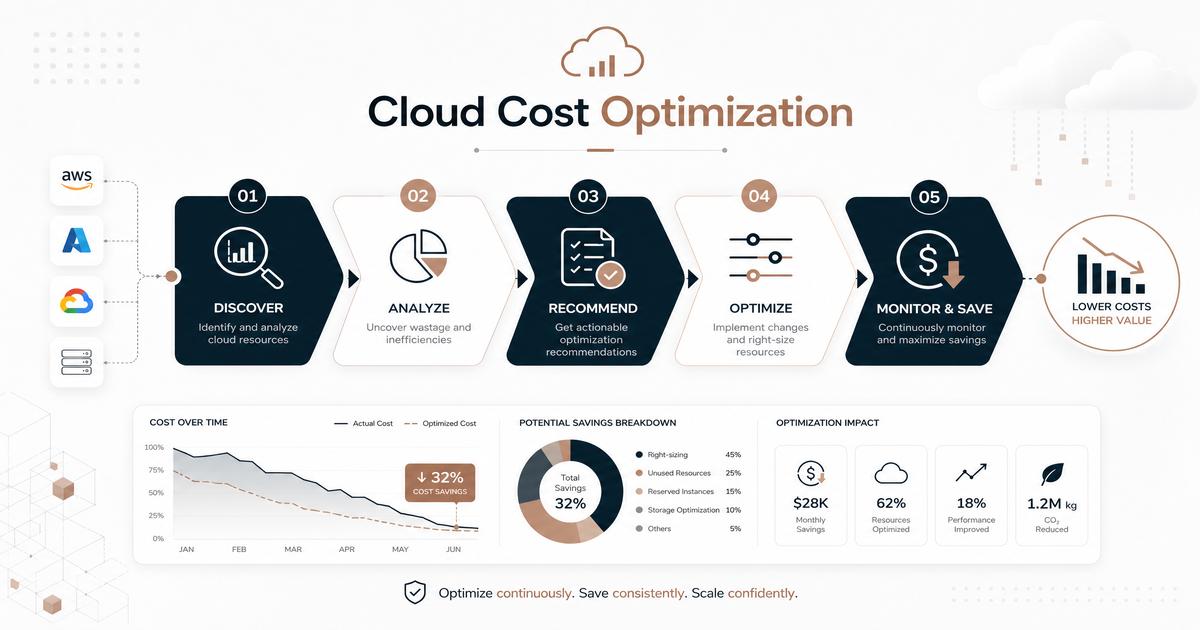
Optimizing cloud costs is an ongoing process, not a one-time task. By understanding your spending, implementing strategic optimization techniques, and fostering a FinOps culture, SaaS startups can significantly reduce their cloud expenditure without compromising performance or scalability. Continuous monitoring, analysis, and adaptation are key to maintaining a healthy cloud budget and maximizing your return on investment.
Call to Action
Ready to take control of your cloud spending? Visit SaaSSync Pro for in-depth reviews and comparisons of cloud cost management tools that can help your SaaS startup thrive. Start optimizing today!