Best Email Marketing Platforms for SaaS Lifecycle Campaigns
Best Email Marketing Platforms for SaaS Lifecycle Campaigns
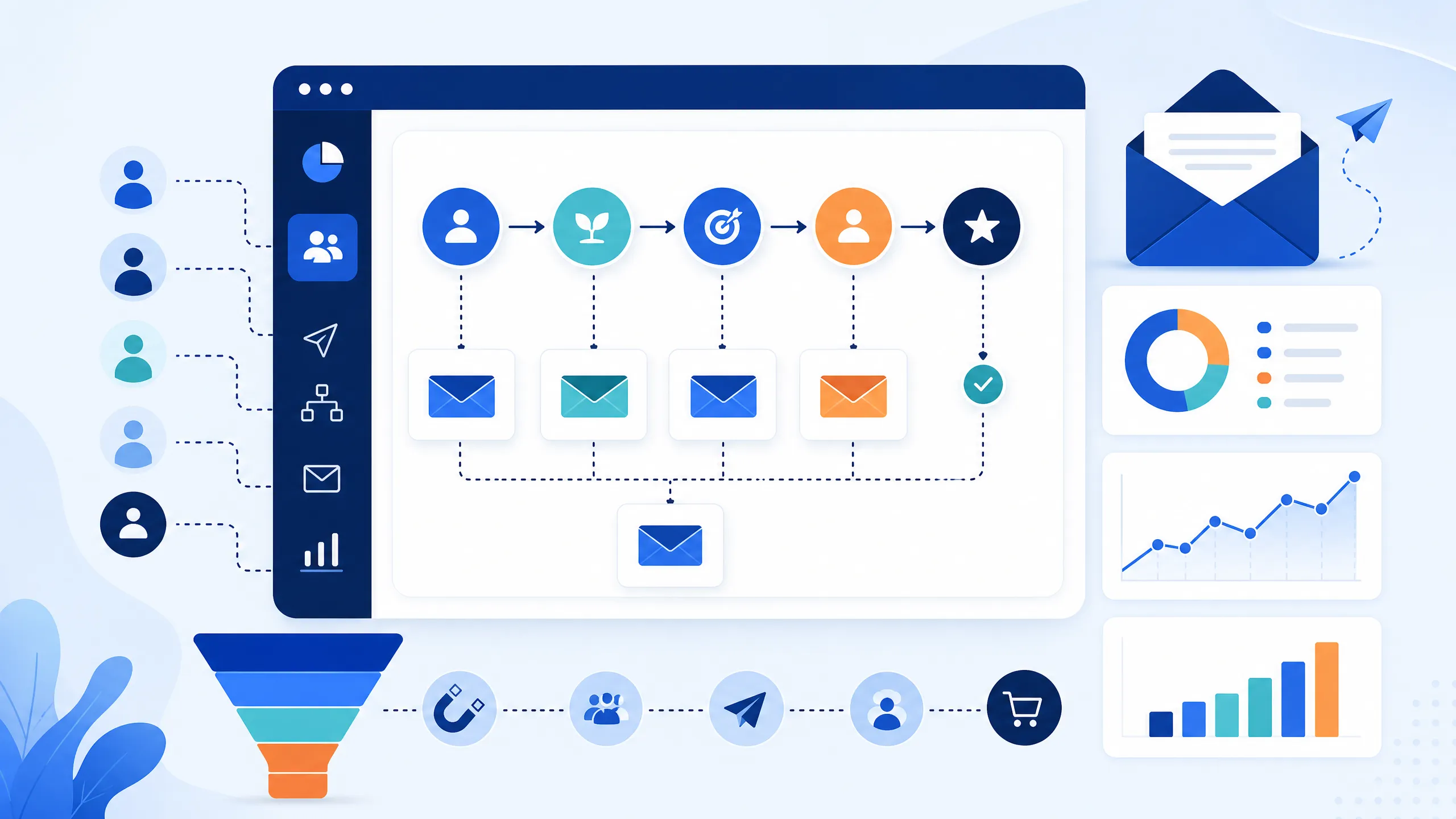
Effective communication across the customer journey is vital for software-as-a-service (SaaS) companies aiming to maximize user activation, drive retention, and minimize churn. Unlike traditional e-commerce or content-driven websites, SaaS businesses rely heavily on behavioral data, product usage metrics, and multi-step lifecycle campaigns. From welcoming newly registered trial users to re-engaging dormant accounts and prompting feature adoption, selecting the right email marketing platform directly influences trial-to-paid conversion rates and long-term customer lifetime value.
Evaluating email marketing infrastructure requires a distinct set of criteria compared to generic bulk mailing tools. SaaS revenue growth depends on seamless event tracking, deep product analytics integrations, dynamic segmentation based on user roles, and reliable deliverability for transactional and marketing messages alike. This guide examines the leading email marketing platforms tailored for SaaS lifecycle campaigns, breaking down core strengths, structural considerations, and strategic selection criteria for modern software teams.
1. ActiveCampaign: Advanced Automation and Behavior-Driven Workflows
ActiveCampaign stands out as a robust solution for SaaS growth teams seeking granular automation capabilities and multi-channel orchestration. The platform combines traditional email marketing with CRM functionality, event tracking, and site tracking, enabling software companies to trigger personalized messages based on specific user actions inside the application. For instance, when a trial user completes key onboarding milestones or, conversely, stalls at a critical friction point, ActiveCampaign workflows can adjust outreach dynamically.
The primary advantage of ActiveCampaign lies in its visual automation builder, which supports branching logic, split testing, and goal tracking across complex user journeys. SaaS marketers can ingest product event data via native integrations or webhooks, ensuring that communication remains contextually relevant. However, teams must carefully monitor contact database growth, as pricing scales with active subscriber counts. While ActiveCampaign provides powerful segmentation tools, engineering resources may still be required to configure robust event streams for precise behavioral triggers.
2. Customer.io: Product-Led Growth and Event-Driven Messaging
Customer.io is built specifically for product-led growth (PLG) companies that treat user behavior inside the application as the primary driver for communication. Rather than organizing contacts solely around static static lists, Customer.io centers its architecture on people, events, and relationships. This data-first approach allows SaaS marketing and product success teams to ingest real-time event streams—such as feature usage, team invitations, and billing status changes—and build hyper-targeted lifecycle campaigns.
The platform excels in handling complex data schemas and sending messages across multiple channels, including email, push notifications, and in-app messaging. Because Customer.io relies heavily on custom attributes and event properties, marketing teams can craft sophisticated personalization without cluttering their CRM with redundant fields. On the operational side, Customer.io requires a higher degree of technical setup and data hygiene compared to traditional email tools, making it best suited for SaaS teams with dedicated product data infrastructure.
3. HubSpot Marketing Hub: Unified CRM and Scalable Lifecycle Nurturing
HubSpot Marketing Hub offers an enterprise-grade ecosystem where email marketing is tightly integrated with a comprehensive CRM, sales pipeline, and customer service suite. For B2B SaaS organizations that manage long sales cycles, multiple stakeholder buying committees, and extensive account-based marketing (ABM) motions, HubSpot provides unparalleled visibility across the entire customer lifecycle from initial lead capture to renewal.
The platform delivers powerful email design tools, robust A/B testing, predictive send-time optimization, and detailed analytics that connect marketing campaigns directly to closed-won revenue. Native synchronization between the CRM and marketing automation engine ensures that sales representatives and automated sequences operate from a single source of truth. Nevertheless, HubSpot can represent a significant financial investment as contact tiers and advanced features expand, requiring careful budget alignment for growing SaaS startups.
Comparative Evaluation of SaaS Email Platforms
| Platform | Core Focus | Primary Data Integration Model | Automation Flexibility | Pricing Logic | Best Suited For |
|---|---|---|---|---|---|
| ActiveCampaign | Behavior-driven workflows | List and event tracking | Advanced visual builder | Tiered by contact volume | Growing B2B SaaS teams |
| Customer.io | Product-led growth (PLG) | Real-time event streams | High flexibility via custom data | Tiered by recipient volume | PLG and product-heavy SaaS |
| HubSpot Marketing Hub | Unified CRM and ABM | Native CRM synchronization | Enterprise-grade workflows | Tiered by contacts and tier level | Scale-ups and enterprise SaaS |
4. Klaviyo: High-Volume Data Integration and Advanced Segmentation
While widely recognized for e-commerce, Klaviyo has increasingly been adopted by SaaS companies seeking powerful data integration and real-time segmentation. Klaviyo’s architecture allows marketing teams to sync massive volumes of historical and real-time event data without rigid schema restrictions. This enables software providers to trigger email sequences based on precise application usage metrics, subscription plan changes, and custom user properties.
Klaviyo provides pre-built integrations with major billing and customer success platforms, simplifying the synchronization of recurring revenue data. The platform’s reporting suite directly connects campaign performance to financial outcomes, offering clear insights into customer lifetime value and cohort engagement. On the downside, Klaviyo’s interface and template builder carry a slight learning curve for teams transitioning from traditional B2B marketing tools, and pricing scales rapidly as database sizes increase.
5. Brevo (formerly Sendinblue): Cost-Effective Transactional and Marketing Infrastructure
Brevo offers a practical, value-oriented approach to SaaS communication by combining transactional email delivery, marketing automation, and SMS under a unified roof. For early-stage SaaS startups operating with lean budgets, Brevo provides an accessible entry point with robust API documentation and reliable deliverability infrastructure for both system-generated notifications and promotional lifecycle campaigns.
The platform features a straightforward drag-and-drop editor, contact management, and customizable automation workflows. A key operational benefit of Brevo is its pricing structure, which is based on message volume rather than total contact storage size. This model protects growing SaaS companies from prohibitive costs as their dormant or free-tier user databases expand. However, Brevo offers less advanced behavioral segmentation and product data handling compared to specialized PLG engines like Customer.io.
Editorial Note
Editorial note: SaaS platform pricing structures, feature tiers, and integration capabilities are subject to change by vendors. Software buyers should check the vendor’s current pricing page and documentation to verify exact limits, add-on costs, and compliance certifications before finalizing software procurement decisions.
How to Choose the Right Email Platform for Your SaaS
Selecting the ideal email marketing platform requires a structured assessment of your product motion, data maturity, and team capabilities. SaaS companies typically follow distinct growth paths that dictate their communication infrastructure needs:
- Evaluate Your Data Maturity: Determine whether your user data lives primarily in a relational database, product analytics tools, or a central CRM. PLG companies relying on real-time event streams benefit most from event-first platforms, whereas sales-led companies thrive on CRM-native suites.
- Analyze Pricing Models: Contrast contact-based pricing tiers with message-based pricing structures. If your free trial model generates large volumes of non-converting signups, message-based or volume-capped pricing often prevents runaway software expenses.
- Assess Cross-Functional Ownership: Consider who will build and maintain campaigns. Marketing-led teams often prefer visual builders with intuitive templates, while product-led teams with developer support can leverage API-heavy, flexible messaging engines.
Frequently Asked Questions (FAQ)
How do SaaS email platforms integrate with product usage data?
SaaS email platforms ingest product usage data through direct API integrations, Segment, native webhooks, or customer data platforms (CDPs). This allows marketers to trigger emails based on specific user milestones, such as completing a setup wizard, inviting a teammate, or reaching storage limits.
What is the difference between marketing email and transactional email in SaaS?
Transactional emails are triggered by direct user actions or system requirements, such as password resets, billing receipts, and workspace invitations, and generally bypass marketing opt-out preferences. Marketing emails encompass onboarding sequences, educational content, promotional upgrades, and re-engagement campaigns.
How often should SaaS companies audit their lifecycle email campaigns?
SaaS companies should audit their core lifecycle and onboarding email sequences at least quarterly. Regular reviews ensure that product feature updates, pricing changes, and new documentation links are accurately reflected across all automated messaging streams.
Conclusion
Choosing the right email marketing platform is a foundational decision that influences user activation, product adoption, and recurring revenue retention for SaaS businesses. Whether opting for the advanced behavioral workflows of ActiveCampaign, the event-driven architecture of Customer.io, the unified ecosystem of HubSpot, the flexible data integration of Klaviyo, or the cost-effective volume scaling of Brevo, alignment between product data infrastructure and communication goals is paramount. By carefully weighing data requirements, pricing mechanics, and team capabilities, SaaS leaders can build an effective lifecycle engine that sustains long-term growth.