How to Start a B2B SaaS Podcast with Remote Recording Tools
How to Start a B2B SaaS Podcast with Remote Recording Tools
Audio content has evolved from a brand-awareness experiment into a core pillar of modern business-to-business marketing and customer acquisition strategies. For software-as-a-service companies operating in competitive markets, building a dedicated podcast provides a unique opportunity to engage industry leaders, demystify complex technical concepts, and build deep trust with prospective buyers. Unlike traditional gated whitepapers or cold outreach campaigns, a podcast creates authentic conversations that resonate with decision-makers who are constantly inundated with digital noise. However, launching and sustaining a professional B2B SaaS podcast requires a rigorous operational framework that integrates professional remote recording software, structured guest management, streamlined post-production, and robust distribution analytics.
Navigating the logistical complexities of high-end audio production often overwhelms marketing teams that are already stretched thin across demand generation, content creation, and product marketing. To succeed, organizations must treat podcasting not as an ad-hoc creative project, but as a structured publishing engine. This comprehensive guide outlines the end-to-end blueprint for establishing a B2B SaaS podcast using modern remote recording tools, optimizing workflows for maximum efficiency, and measuring return on investment across the customer lifecycle. By focusing on quality, consistency, and strategic alignment, SaaS marketing leaders can turn episodic conversations into a reliable pipeline for qualified pipeline generation.
Strategic Alignment and Audience Definition for SaaS Podcasts
Before selecting recording hardware or downloading editing software, marketing leaders must define the strategic purpose of the podcast within the broader company revenue engine. A B2B SaaS podcast cannot succeed by chasing vanity metrics or broad consumer appeal; it must directly address the specific pain points, aspirations, and operational challenges of a well-defined target audience. Whether the ideal customer profile consists of vice presidents of engineering, chief information security officers, or product-led growth marketing directors, every episode must deliver actionable insights that validate their professional expertise and subtly connect to the overarching category problems solved by your software platform.
Establishing clear editorial pillars ensures that guest bookings and episode topics remain cohesive rather than drifting into generic industry banter. Successful SaaS podcasts typically revolve around three distinct content categories: deep-dive architectural discussions that appeal to technical evaluators, strategic leadership roundtables that engage executive buyers, and customer success retrospectives that highlight measurable business transformations. By mapping these pillars to specific stages of the customer journey, marketing teams can ensure that listeners move naturally from top-of-funnel brand awareness to mid-funnel consideration and bottom-funnel product validation. Furthermore, involving sales and customer success teams in topic ideation guarantees that the content addresses real objections encountered in live deals.
| Content Pillar | Target Persona | Primary Objective | Associated Funnel Stage |
|---|---|---|---|
| Technical Architecture | CTOs, VP of Engineering | Deep dive into engineering scale, security, and integration challenges | Consideration & Evaluation |
| Executive Strategy | Chief Revenue Officers, CFOs | Discuss operational efficiency, ROI, and organizational scaling | Brand Awareness & Interest |
| Customer Spotlight | Product Managers, Operations | Showcase migration success stories, workflow best practices, and results | Decision & Retention |
Selecting Remote Recording Software and Hardware Infrastructure
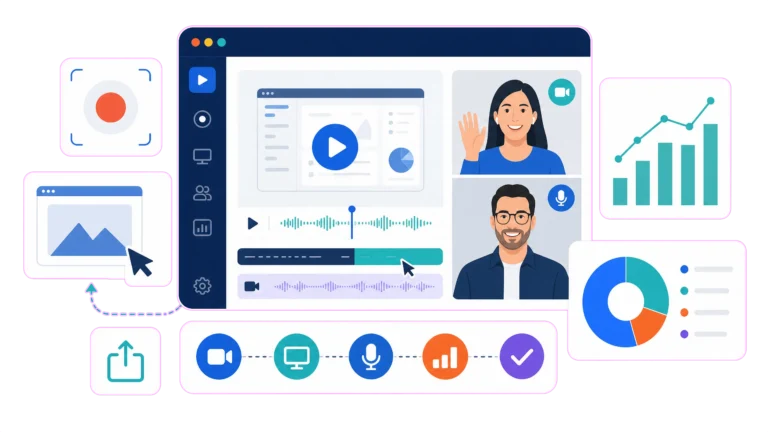
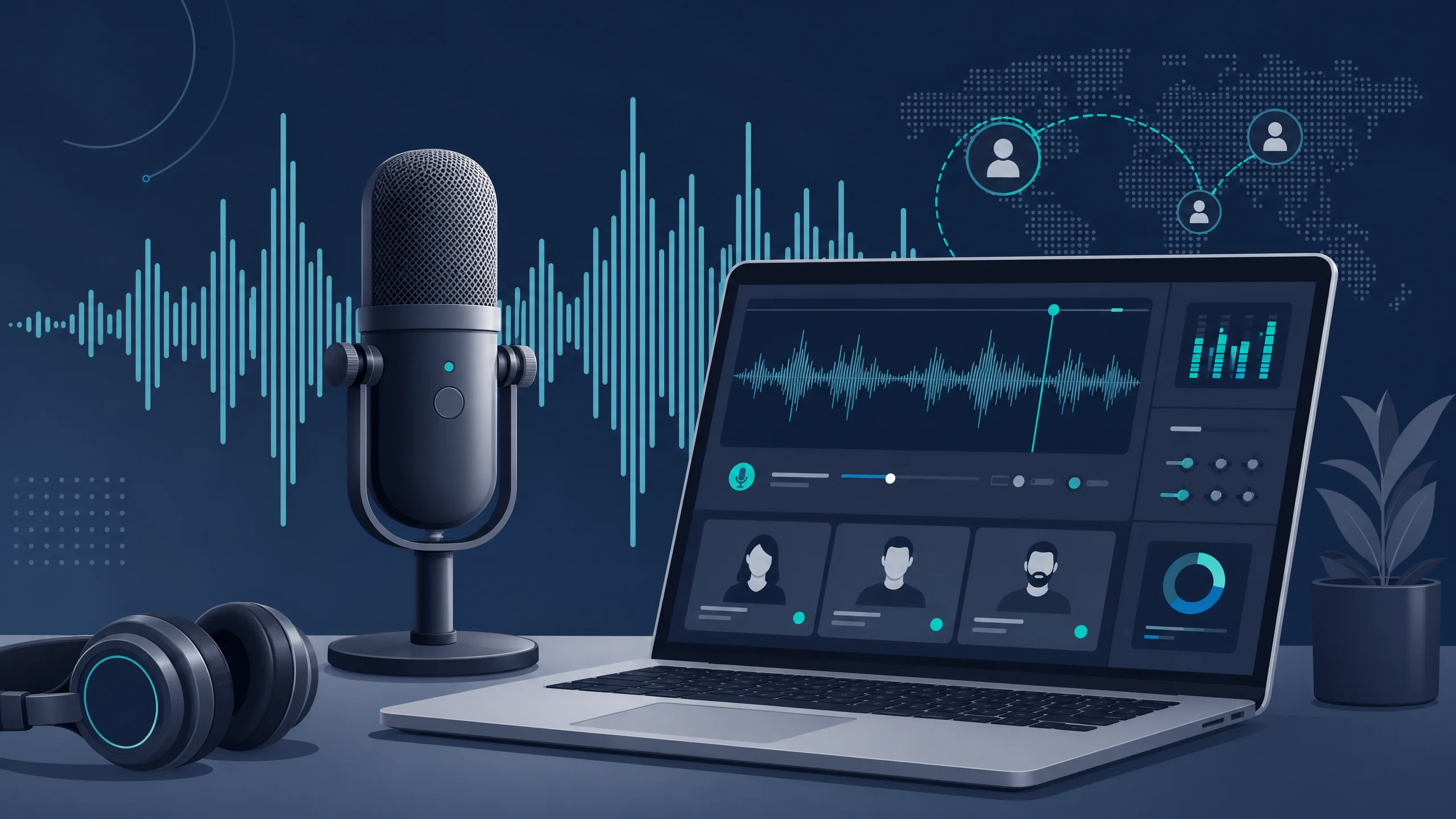
The technical foundation of any modern B2B SaaS podcast rests upon reliable, high-fidelity remote recording software [8]. Because enterprise guests and industry experts are rarely located in the same geographic region, relying on standard video conferencing applications often results in compressed audio, artifacts, and internet lag that undermine professional credibility. Modern podcasters utilize specialized remote recording platforms that capture uncompressed, double-ended local audio and video tracks directly from each participant’s browser before uploading the high-resolution files to the cloud. This architectural approach guarantees broadcast-quality output regardless of temporary fluctuations in individual internet connections.
When evaluating remote recording solutions such as Riverside.fm, SquadCast, or Zencastr, SaaS teams should prioritize platforms that offer robust guest onboarding flows, automated transcript generation, and direct integrations with cloud storage repositories [8]. Enterprise compliance is another critical consideration; SaaS marketing teams operating in regulated sectors must verify that recording vendors comply with SOC 2 security standards and data privacy regulations like GDPR. On the hardware front, investing in reliable USB dynamic microphones, closed-back headphones, and acoustic treatment significantly improves baseline audio quality without requiring an expensive dedicated soundstage.
- Local Multi-Track Recording: Ensures that audio and video streams are recorded locally on each participant’s device, eliminating dropouts caused by unstable network packets.
- Automated Transcription: Accelerates the post-production workflow by generating synchronized text transcripts for show notes, blog repurposing, and clipping.
- Enterprise Security Controls: Guarantees that sensitive executive conversations remain encrypted in transit and at rest within compliant cloud environments.
Designing a Repeatable Guest Booking and Interview Workflow
A sustainable podcasting operation depends heavily on frictionless guest booking and preparation workflows. For B2B SaaS brands, booking high-profile guests—such as industry analysts, enterprise practitioners, and influential thought leaders—serves a dual purpose: it delivers immediate educational value to listeners and opens direct pathways for organic co-marketing and executive networking. However, busy enterprise executives will quickly abandon a podcast if the scheduling, briefing, and recording process feels disorganized or overly demanding of their time.
To streamline this process, marketing teams should implement standardized scheduling links, automated reminder sequences, and comprehensive briefing documents that outline the core themes, expected questions, and technical requirements. Conducting a brief pre-interview call or asynchronous audio check prior to recording helps demystify the technology for guests, establishes rapport, and ensures that the resulting conversation remains focused and articulate. Maintaining a centralized CRM or pipeline tracker for guest outreach, recording status, and publication dates prevents promising leads from falling through the cracks and ensures a predictable publishing cadence.
Post-Production, Audio Engineering, and Content Repurposing
Once the raw interview files are safely captured and uploaded from the remote recording platform, the post-production phase begins. Audio engineering for B2B SaaS podcasts requires a careful balance between natural vocal dynamics and broadcast-standard loudness normalization. Editors must clean up background noise, remove awkward pauses or conversational filler, and apply compression and EQ to ensure consistent volume levels across different speakers. While human editing remains essential for maintaining narrative flow and nuance, modern AI-assisted editing tools can automate repetitive tasks such as transcription cleanup, filler word removal, and multi-track synchronization.
Beyond publishing the full-length audio episode, forward-thinking SaaS marketing teams treat each recording session as an omni-channel content engine. A single interview can be systematically disassembled into multiple high-impact marketing assets, including bite-sized video clips for LinkedIn, quotable LinkedIn carousels, detailed blog summaries optimized for search engines, and email newsletters sent directly to active subscribers. This rigorous repurposing framework maximizes the return on invested editorial hours and ensures that the core insights reach target buyers across their preferred consumption channels.
- Audio Mastering: Standardizes integrated loudness levels to ensure comfortable listening across all mobile devices and streaming platforms.
- Multi-Channel Repurposing: Converts long-form audio transcripts into short-form social clips, blog articles, and email thought-leadership pieces.
- Metadata Optimization: Embeds clean ID3 tags, descriptive show notes, and targeted keywords to maximize organic discovery in podcast directories.
Distribution, Hosting, and Cross-Platform Syndication
Selecting the right podcast hosting and distribution infrastructure is crucial for ensuring reliable delivery and accurate audience measurement. Unlike traditional website hosting, podcast hosting platforms store large audio files and generate RSS feeds that automatically syndicate new episodes to major directories, including Apple Podcasts, Spotify, Amazon Music, and YouTube Podcasts. When evaluating hosting providers such as Libsyn, Podbean, or Transistor, SaaS teams should examine analytics capabilities, IAB-certified download tracking, team permission controls, and support for private subscriber feeds if internal training content is also planned.
Successful distribution extends far beyond simply pushing an RSS feed to directory aggregators. SaaS companies should integrate podcast episodes directly into their corporate website by embedding responsive media players within dedicated resource hubs, optimizing show pages with structured schema markup, and featuring new episodes prominently in customer onboarding emails and retargeting campaigns. Furthermore, encouraging listeners to subscribe, rate, and review the show creates vital algorithmic momentum that elevates the podcast’s visibility within competitive category rankings.
- RSS Syndication: Automates the distribution of new episodes across global directories through standardized XML feeds.
- IAB-Certified Analytics: Provides verified download metrics, unique listener counts, geographic data, and client application breakdowns without privacy violations.
- Web Integration: Embeds clean audio players and comprehensive show notes directly into corporate resource centers to drive inbound organic traffic.
How to Choose the Right Tool Stack for Your SaaS Podcast
Selecting the ideal software and hardware stack requires a careful evaluation of internal team bandwidth, technical expertise, corporate security requirements, and overall marketing budget. Organizations should avoid purchasing over-engineered enterprise platforms if a streamlined, creator-focused toolset can adequately fulfill their weekly production needs. The decision-making matrix below outlines the primary criteria SaaS leaders should weigh when assembling their podcasting infrastructure.
| Evaluation Criterion | Low-Cost / Starter Approach | Enterprise / Advanced Approach | Key Decision Factor |
|---|---|---|---|
| Remote Recording | Browser-based recording tools with standard cloud storage | Dedicated multi-track studios with local backup & ISO video | Need for pristine uncompressed 4K video and audio backup |
| Audio Editing | Automated browser-based AI editors and basic timeline tools | Dedicated DAW software with professional mixing plugins | Complexity of sound design and multi-speaker balancing |
| Hosting & Analytics | Basic podcast hosting with standard download counters | Enterprise hosting with IAB certification and API access | Requirement for advanced attribution and user tracking |
| Distribution | Manual submission to primary consumer directories | Automated syndication networks with CRM and marketing automation sync | Scale of promotional workflows and sales alignment |
Editorial note: Pricing structures, platform features, and third-party integrations mentioned in this guide are subject to change. Marketing teams should check the vendor’s current pricing page and documentation before finalizing procurement decisions.
Frequently Asked Questions
What is the most important equipment needed to start a B2B SaaS podcast?
While high-end studio rooms are unnecessary, investing in a quality dynamic microphone, closed-back monitoring headphones, and a stable high-speed internet connection is mandatory. Good microphone technique and basic acoustic treatment in your recording space will have a more dramatic impact on perceived audio quality than expensive mixing hardware.
How often should a B2B SaaS podcast publish new episodes?
Consistency is far more important than high frequency when building an executive B2B audience. A bi-weekly or monthly publishing cadence allows marketing teams sufficient time to conduct deep research, secure high-caliber guests, and execute a comprehensive multi-channel repurposing campaign without burning out internal resources.
How can a B2B SaaS company measure the ROI of a podcast?
Unlike direct-response digital advertising, podcast ROI is best measured through a combination of leading and lagging indicators. Track qualitative executive engagement, inbound demo requests citing the podcast in conversion forms, organic search traffic growth on show notes pages, and co-marketing amplification generated by guest sharing networks.
Conclusion
Launching a B2B SaaS podcast using professional remote recording tools offers a powerful pathway to cut through market noise, engage elusive decision-makers, and build an enduring content asset for your brand. By treating podcasting as a structured operational workflow—spanning strategic audience definition, robust technical recording infrastructure, frictionless guest management, meticulous post-production, and targeted distribution—marketing teams can transform episodic conversations into a predictable engine for pipeline growth. As software markets become increasingly crowded, the authentic human connections forged through high-quality audio content will remain a definitive competitive advantage for forward-thinking SaaS organizations.