How to Launch a Successful Partner Program for Your SaaS
Introduction
In the rapidly evolving landscape of Software as a Service (SaaS), establishing a robust partner program has transitioned from a strategic advantage to a fundamental necessity for sustainable growth. For business owners, founders, marketers, and IT professionals seeking to expand their market reach and accelerate customer acquisition, understanding and implementing an effective partner program is paramount. This article delves into the intricacies of launching a successful SaaS partner program, offering insights into its strategic importance, various models, key components, and actionable steps for implementation.
Understanding SaaS Partner Programs
What is a SaaS Partner Program?
A SaaS partner program is a strategic initiative where a software vendor collaborates with external entities—partners—to sell, market, or integrate their SaaS solutions. Unlike direct sales, which rely solely on the vendor’s internal sales force, partner programs leverage the existing networks, expertise, and customer relationships of third parties. The core objective is to extend market reach, drive sales, and enhance customer value through collaborative efforts.
Types of SaaS Partner Programs
SaaS partner programs are diverse, each designed to achieve specific business objectives. Understanding the distinctions is crucial for selecting the model that best aligns with your strategic goals.
-
Referral Programs: These programs incentivize partners to refer potential customers to the SaaS vendor. Partners typically receive a commission for each successful referral that converts into a paying customer. Referral programs are ideal for businesses with a strong existing customer base or network, offering a low-barrier entry point for partners.
-
Reseller Programs: In a reseller program, partners purchase the SaaS product from the vendor at a discounted rate and then resell it to their own customers, often bundling it with their services or solutions. Reseller programs are effective for expanding into new geographical markets or industries where partners have established credibility and sales channels.
-
Affiliate Programs: Similar to referral programs, affiliate programs involve partners promoting the SaaS product through unique tracking links. Partners earn a commission on sales generated through their links. Affiliate programs are particularly popular in content marketing and influencer spheres, offering broad reach with performance-based compensation.
-
Technology/Integration Partners: These partners integrate their software or services with the SaaS vendor’s platform, creating a more comprehensive solution for end-users. This type of partnership enhances product value, expands ecosystem capabilities, and can lead to joint marketing opportunities.
Benefits of Launching a SaaS Partner Program
The advantages of a well-executed SaaS partner program are multifaceted, contributing significantly to a company’s growth trajectory.
-
Accelerated Growth: Partners act as an extended sales force, enabling SaaS companies to penetrate new markets and reach a broader customer base more rapidly than through direct sales alone.
-
Cost-Effective Customer Acquisition: Leveraging partners’ existing customer relationships and marketing channels can significantly reduce the Customer Acquisition Cost (CAC) compared to traditional marketing and sales efforts.
-
Increased Market Penetration: Partners often possess deep knowledge of specific niches or geographies, allowing the SaaS vendor to tap into previously inaccessible segments and achieve greater market saturation.
-
Enhanced Credibility and Trust: When a trusted partner recommends a SaaS solution, it inherently carries more weight with their audience, building credibility and fostering trust that can be challenging to establish independently.
-
Product Innovation and Feedback: Partners, being on the front lines with customers, can provide invaluable feedback on product features, market demands, and potential improvements, driving continuous innovation.
Key Components of a Successful SaaS Partner Program
Building a successful partner program requires careful consideration and structured implementation of several key components.
-
Clear Objectives and Strategy: Define what you aim to achieve with your program (e.g., revenue targets, market expansion, specific integrations). Identify your ideal partner profile, considering their industry, customer base, and technical capabilities.
-
Attractive Commission Structure/Incentives: A competitive and transparent compensation model is crucial. This might include tiered commission rates based on performance, bonuses for exceeding targets, or recurring revenue shares for subscription-based products. The incentives must motivate partners and reflect the value they bring.
-
Comprehensive Partner Onboarding and Training: Provide partners with all the necessary tools and knowledge to succeed. This includes product training, sales enablement materials, marketing guidelines, and access to a dedicated support team. A smooth onboarding process ensures partners are quickly productive.
-
Robust Partner Portal/CRM: A centralized platform is essential for managing partner relationships. This portal should allow partners to track leads, monitor sales performance, access marketing collateral, submit support tickets, and view commission payouts. Integration with a CRM system ensures seamless data flow and management.
-
Dedicated Partner Support: Assigning dedicated account managers or a support team to partners fosters strong relationships and ensures they receive timely assistance. This support can range from technical queries to sales strategy guidance.
-
Marketing and Sales Collateral: Equip partners with high-quality, co-brandable marketing and sales materials, such as brochures, case studies, whitepapers, demo scripts, and email templates. This consistency in messaging strengthens brand presence and aids partner sales efforts.
-
Legal Framework: Establish clear and comprehensive partner agreements that outline roles, responsibilities, compensation terms, intellectual property rights, and termination clauses. A solid legal framework protects both the vendor and the partner.
Steps to Launching Your SaaS Partner Program
Launching a partner program is a phased process that requires meticulous planning and execution.
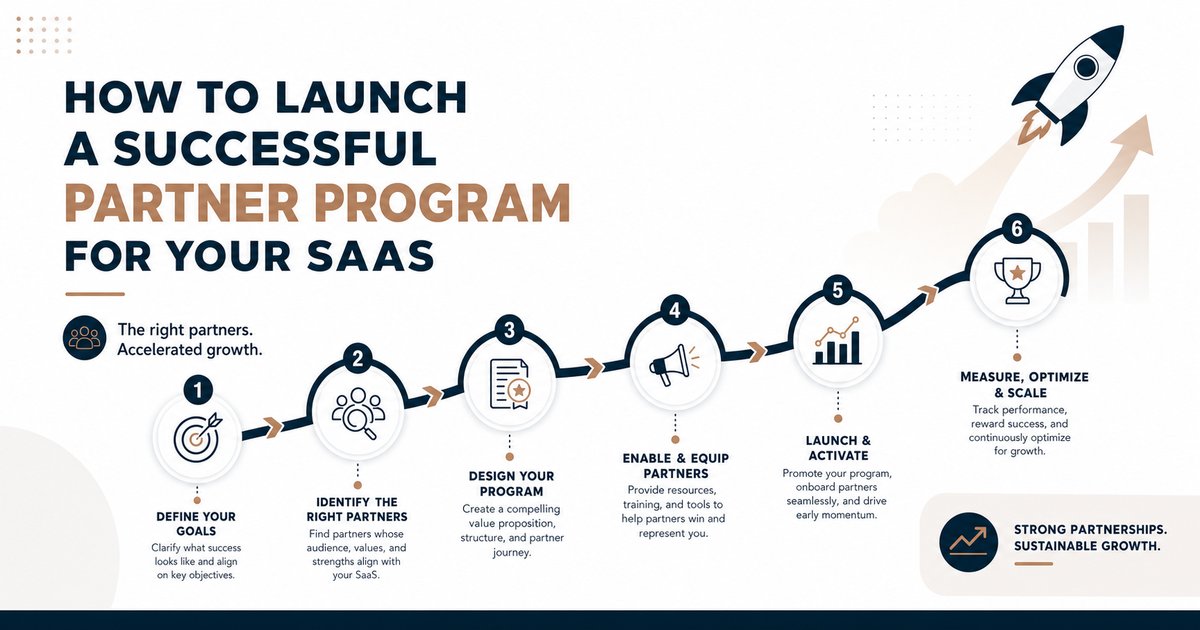
Define Your Program Goals and Strategy
Begin by clearly articulating what you want to achieve. Are you looking to increase revenue by a certain percentage, enter new geographic markets, or enhance your product’s ecosystem through integrations? Your goals will dictate the type of program and the ideal partner profile. For instance, if market penetration is the primary goal, reseller partners might be more effective.
Design Your Program Structure and Incentives
Based on your goals, select the most appropriate program types (referral, reseller, affiliate, technology). Develop a compelling commission structure that motivates partners. Consider factors like one-time vs. recurring commissions, tiered incentives, and performance bonuses. Ensure the payment schedule is clear and reliable.
Develop Partner Resources and Support
Invest in creating comprehensive onboarding materials, including product documentation, sales playbooks, and training modules. Establish a user-friendly partner portal that serves as a one-stop shop for all partner needs. Crucially, dedicate resources for ongoing partner support, whether through account managers or a specialized support team.
Recruit and Onboard Your First Partners
Identify and target potential partners through various channels, including industry events, professional networks, and direct outreach. Develop a compelling value proposition that highlights the benefits of partnering with your SaaS. Once partners are identified, ensure a streamlined and efficient onboarding process that quickly integrates them into your ecosystem.
Launch, Monitor, and Optimize
Consider a soft launch with a select group of partners to gather feedback and refine your program. Continuously monitor key performance indicators (KPIs) such as partner-generated revenue, partner activation rates, lead conversion rates, and average deal size. Use this data to iterate and optimize your program, making adjustments to incentives, resources, or support as needed.
Common Challenges and Solutions
While highly beneficial, SaaS partner programs come with their own set of challenges.
-
Recruiting High-Quality Partners: Attracting partners who align with your brand and have the capability to drive sales can be difficult. Solution: Clearly define your ideal partner profile and actively seek out those who fit. Offer compelling incentives and demonstrate clear value.
-
Partner Engagement and Retention: Keeping partners motivated and actively engaged requires ongoing effort. Solution: Provide continuous training, regular communication, performance recognition, and opportunities for feedback. Foster a sense of community.
-
Channel Conflict: Direct sales teams may perceive partners as competition. Solution: Establish clear rules of engagement, define territories or customer segments, and ensure transparent lead registration processes to avoid conflicts.
-
Tracking and Attribution: Accurately attributing sales and commissions to partners can be complex. Solution: Implement robust partner management software with advanced tracking capabilities and clear attribution rules.
-
Scalability Issues: As the program grows, managing a large number of partners can become overwhelming. Solution: Automate processes where possible, leverage technology for partner management, and ensure your support infrastructure can scale with demand.
Measuring Success: KPIs and ROI
To ensure the long-term success of your SaaS partner program, it is vital to continuously measure its performance against predefined metrics.
-
Key Performance Indicators (KPIs):
- Partner-Generated Revenue: The total revenue directly attributable to partner sales.
- Number of Active Partners: The count of partners actively generating leads or sales.
- Lead-to-Opportunity Conversion Rate: The percentage of partner-generated leads that convert into qualified opportunities.
- Average Deal Size: The average value of deals closed by partners.
- Partner Activation Rate: The percentage of onboarded partners who become active within a defined period.
-
Calculating ROI: To demonstrate the value of your program, calculate its Return on Investment (ROI). This involves comparing the revenue generated by partners against the costs associated with managing the program (commissions, support, technology, marketing). A positive ROI indicates a successful and profitable program.
Pros and Cons of a SaaS Partner Program
Pros
- Expanded Market Reach: Access to new customer segments and geographical areas.
- Increased Revenue: Diversified sales channels leading to higher overall sales.
- Reduced Customer Acquisition Costs: Leveraging partners’ existing relationships and marketing efforts.
- Enhanced Brand Credibility: Partners’ endorsements build trust and authority.
- Faster Time to Market: Quicker entry into new markets with established partner networks.
Cons
- Requires Significant Investment: Time, resources, and capital are needed for setup and ongoing management.
- Potential for Channel Conflict: Risk of competition between direct sales and partners if not managed carefully.
- Dependency on Partner Performance: Success is partly reliant on the effectiveness and motivation of partners.
- Complexity in Management and Tracking: Requires robust systems and processes to manage partner relationships, commissions, and performance.
- Brand Control Challenges: Maintaining consistent brand messaging and customer experience through partners can be difficult.
Conclusion
Launching a successful SaaS partner program is a strategic endeavor that, when executed thoughtfully, can unlock significant growth opportunities. By carefully defining objectives, designing attractive incentives, providing comprehensive support, and continuously optimizing based on performance, SaaS companies can build a powerful ecosystem of partners. While challenges exist, the long-term benefits of accelerated growth, cost-effective customer acquisition, and enhanced market penetration make a well-structured partner program an invaluable asset in the competitive SaaS landscape. For business leaders looking to scale their operations and solidify their market position, investing in a robust partner program is not just an option, but a strategic imperative.