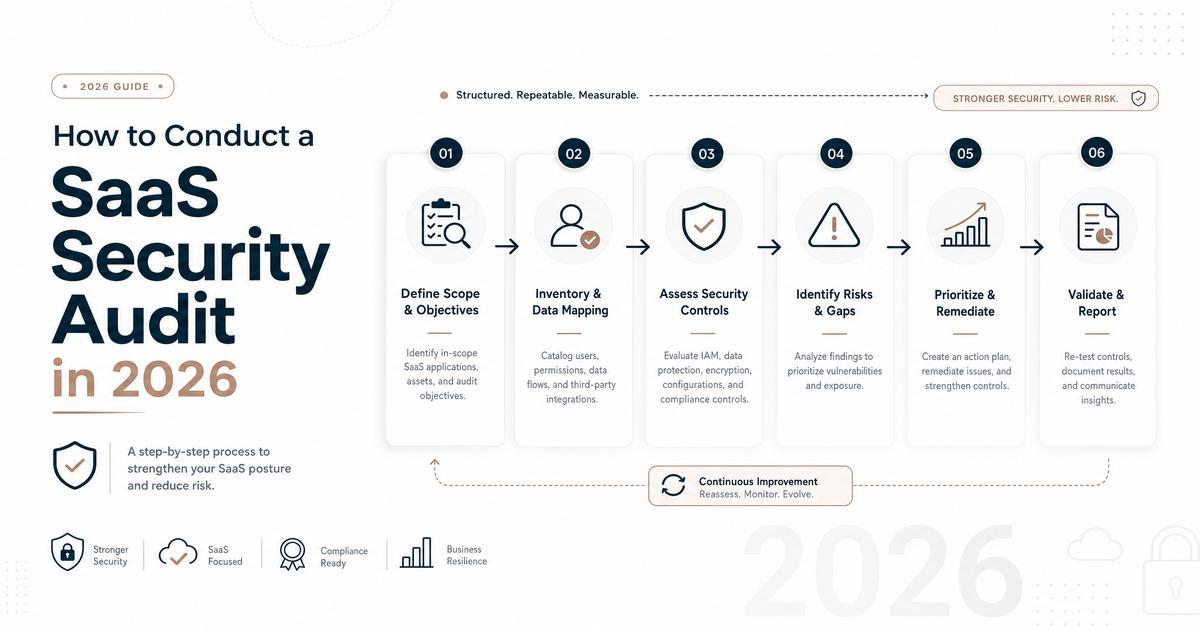
How to Conduct a SaaS Security Audit in 2026
How to Conduct a SaaS Security Audit in 2026
In the rapidly evolving digital landscape of 2026, Software as a Service (SaaS) applications have become indispensable tools for businesses of all sizes. From customer relationship management (CRM) to enterprise resource planning (ERP) and collaboration platforms, SaaS solutions offer unparalleled flexibility, scalability, and cost-effectiveness. However, this widespread adoption also introduces significant cybersecurity challenges. As organizations increasingly rely on third-party providers to host and manage critical data and applications, the need for robust security measures has never been more pressing. A proactive approach to safeguarding sensitive information and maintaining operational integrity is paramount.
This comprehensive guide will delve into the intricacies of conducting a SaaS security audit in 2026. We will explore why these audits are not just a best practice but a necessity, outline the key objectives, and provide a practical, step-by-step framework to help your organization identify, assess, and mitigate potential security risks associated with your SaaS ecosystem. By the end of this guide, you will have a clear understanding of how to ensure your SaaS applications are secure, compliant, and resilient against emerging threats.
Understanding SaaS Security Audits
What is a SaaS Security Audit?
A SaaS security audit is a systematic and independent examination of an organization’s SaaS applications and the security controls implemented by both the organization and its SaaS providers. The primary goal is to evaluate the effectiveness of these controls in protecting data, ensuring compliance with regulatory requirements, and identifying vulnerabilities that could be exploited by malicious actors. Unlike traditional on-premise security audits, SaaS audits involve a shared responsibility model, where the security of the application, infrastructure, and underlying cloud environment is a joint effort between the customer and the SaaS vendor.
Why are they Crucial for Businesses?
The reliance on SaaS applications means that a significant portion of a business’s critical data and operations resides outside its direct control. This introduces unique security challenges:
- Data Breaches: Misconfigurations, weak access controls, or vulnerabilities in SaaS applications can lead to devastating data breaches, resulting in financial losses, reputational damage, and legal repercussions.
- Compliance Requirements: Many industries are subject to stringent regulatory frameworks (e.g., GDPR, HIPAA, SOC 2, ISO 27001). SaaS security audits help ensure that both the organization and its vendors meet these compliance obligations.
- Shadow IT: The ease of adopting SaaS applications can lead to “shadow IT,” where employees use unauthorized SaaS tools, creating unmanaged security risks. Audits help bring these under control.
- Vendor Risk Management: Assessing the security posture of SaaS vendors is critical. An audit provides assurance that vendors are adhering to agreed-upon security standards and practices.
- Operational Resilience: Identifying and addressing security weaknesses proactively enhances the overall resilience of business operations, minimizing downtime and service disruptions.
Key Objectives of a SaaS Security Audit
A well-executed SaaS security audit aims to achieve several critical objectives:
- Identify Vulnerabilities: Discover security weaknesses in SaaS configurations, access controls, and vendor practices.
- Assess Compliance: Verify adherence to internal security policies, industry standards, and regulatory mandates.
- Evaluate Data Protection: Ensure that sensitive data stored and processed within SaaS applications is adequately protected against unauthorized access, use, disclosure, disruption, modification, or destruction.
- Review Access Management: Confirm that user access to SaaS applications is appropriately managed, with strong authentication and authorization mechanisms in place.
- Strengthen Vendor Security: Provide insights into the security posture of SaaS providers and drive improvements where necessary.
- Enhance Incident Response: Evaluate the effectiveness of incident response plans for SaaS-related security events.
Pre-Audit Planning and Preparation
Step 1: Define Scope and Objectives
The success of any audit hinges on clear definition. Begin by:
- Identify Critical SaaS Applications: List all SaaS applications used across the organization, prioritizing those that handle sensitive data or are critical to business operations.
- Determine Compliance Requirements: Understand which regulatory frameworks and industry standards apply to your organization and its data (e.g., GDPR for personal data, HIPAA for healthcare, SOC 2 for service organizations).
- Set Clear Audit Goals: What do you hope to achieve? Is it to ensure compliance, identify specific vulnerabilities, or assess a new vendor? Specific goals will guide the entire audit process.
Step 2: Assemble the Audit Team
The audit team should possess a diverse set of skills:
- Internal vs. External Auditors: Decide whether to use internal resources, engage external cybersecurity consultants, or a hybrid approach. External auditors often bring specialized expertise and an unbiased perspective.
- Required Skill Sets: The team should include individuals with expertise in cybersecurity, compliance, cloud computing, and the specific SaaS applications being audited. Legal counsel may also be necessary for compliance aspects.
Step 3: Gather Necessary Documentation
Thorough documentation is the foundation of a robust audit:
- SaaS Vendor Security Policies and Certifications: Request and review security policies, certifications (e.g., ISO 27001, SOC 2 reports), and audit reports from your SaaS providers.
- Internal Security Policies and Procedures: Collect your organization’s own security policies, access control procedures, data handling guidelines, and incident response plans.
- Contractual Agreements with SaaS Providers: Review service level agreements (SLAs) and contracts to understand the shared security responsibilities and vendor obligations.
Conducting the SaaS Security Audit: A Step-by-Step Guide
Step 4: Vendor Assessment
Your SaaS vendors are an extension of your security perimeter. A thorough assessment includes:
- Review Vendor Security Posture: Examine their security certifications, incident response capabilities, data encryption practices, and physical security measures.
- Evaluate Vendor’s Access Controls and Data Handling Practices: Understand how the vendor manages access to your data and their procedures for data storage, processing, and deletion.
- Assess Third-Party Risk Management: Inquire about the vendor’s own third-party risk management program, as their sub-processors can also introduce risk.
Step 5: Configuration Review
Misconfigurations are a leading cause of cloud security breaches. This step involves:
- Examine SaaS Application Settings for Misconfigurations: Review all configurable security settings within each SaaS application. Look for default settings that should be hardened, unnecessary features enabled, or overly permissive access.
- Verify Adherence to Security Best Practices: Ensure principles like least privilege, strong authentication, and network segmentation are applied where applicable.
- Review Integration Points with Other Systems: Assess the security of APIs and connectors used to integrate SaaS applications with other internal systems.
Step 6: Access Control and Identity Management
Controlling who has access to what is fundamental to security:
- Audit User Roles, Permissions, and Access Levels: Verify that users only have the minimum necessary permissions to perform their job functions. Regularly review and revoke access for departed employees.
- Verify Multi-Factor Authentication (MFA) Implementation: Ensure MFA is enforced for all users, especially for administrative accounts.
- Review Identity Provisioning and De-provisioning Processes: Confirm that processes for creating, modifying, and deleting user accounts are robust and timely.
Step 7: Data Security and Privacy
Protecting sensitive data is a core objective:
- Assess Data Encryption at Rest and in Transit: Verify that data is encrypted both when stored (at rest) and when being transmitted (in transit) between your organization and the SaaS provider.
- Review Data Retention and Deletion Policies: Ensure that data retention policies align with regulatory requirements and that data is securely deleted when no longer needed.
- Verify Compliance with Data Privacy Regulations: Confirm that the handling of personal and sensitive data complies with relevant privacy laws like GDPR, CCPA, or HIPAA.
Step 8: Incident Response and Business Continuity
Preparation for the inevitable:
- Evaluate the SaaS Vendor’s Incident Response Plan: Understand how the vendor detects, responds to, and recovers from security incidents. What are their communication protocols?
- Review Disaster Recovery and Business Continuity Plans: Assess the vendor’s ability to restore services and data in the event of a major outage or disaster.
- Test Incident Response Procedures (if applicable): If possible, participate in or review the results of incident response drills conducted by the vendor.
Step 9: Continuous Monitoring and Logging
Security is an ongoing process:
- Verify Logging and Monitoring Capabilities within the SaaS Application: Ensure that the SaaS application provides adequate audit logs and monitoring features to track user activity and security events.
- Assess Integration with SIEM/SOAR Solutions: Determine if logs can be integrated with your Security Information and Event Management (SIEM) or Security Orchestration, Automation, and Response (SOAR) systems for centralized monitoring and analysis.
- Review Alert Mechanisms and Reporting: Understand how the SaaS application alerts administrators to suspicious activities and the reporting capabilities available.
Post-Audit Activities
Step 10: Report Findings and Recommendations
The audit culminates in a comprehensive report:
- Document Vulnerabilities and Risks Identified: Clearly articulate all discovered security weaknesses, their potential impact, and the likelihood of exploitation.
- Provide Actionable Recommendations for Remediation: Offer specific, practical steps to address each identified vulnerability.
- Prioritize Findings Based on Severity: Categorize findings (e.g., critical, high, medium, low) to guide remediation efforts effectively.
Step 11: Remediation and Follow-up
The audit is only valuable if its findings lead to action:
- Implement Recommended Security Controls: Work with relevant teams (IT, security, legal) and SaaS vendors to implement the recommended security enhancements.
- Track Remediation Progress: Establish a system to monitor the status of each remediation task and ensure timely completion.
- Schedule Follow-up Audits: Plan periodic follow-up audits to verify that remediation efforts have been effective and that new vulnerabilities have not emerged.
Best Practices for Ongoing SaaS Security
Beyond periodic audits, maintaining a strong SaaS security posture requires continuous effort:
- Regularly Review SaaS Vendor Security Updates: Stay informed about security advisories, patches, and new features released by your SaaS providers.
- Implement a Robust Change Management Process for SaaS Configurations: Any changes to SaaS application settings should follow a formal change management process, including testing and approval.
- Educate Users on SaaS Security Best Practices: User awareness training is crucial. Educate employees on phishing, strong password practices, and the secure use of SaaS applications.
- Leverage Security Tools for Continuous Monitoring: Utilize Cloud Access Security Brokers (CASBs), Security Posture Management (CSPM) tools, and other security solutions to continuously monitor SaaS environments for misconfigurations, compliance deviations, and suspicious activities.
Conclusion
In the dynamic world of 2026, SaaS applications are integral to business success, but they also represent a significant attack surface. Conducting regular, thorough SaaS security audits is not merely a compliance checkbox; it is a fundamental pillar of a robust cybersecurity strategy. By systematically assessing vendor security, reviewing configurations, managing access, protecting data, and preparing for incidents, organizations can significantly reduce their risk exposure.
The shared responsibility model of SaaS security demands a proactive and collaborative approach. By following the steps outlined in this guide, businesses can gain confidence in their SaaS ecosystem, protect their valuable assets, and maintain the trust of their customers and stakeholders. Don’t wait for a breach to highlight your vulnerabilities. Prioritize and implement regular SaaS security audits to build a resilient and secure digital future.
Call to Action: Ready to strengthen your SaaS security? Start planning your next SaaS security audit today and ensure your business is protected against the evolving threat landscape. Visit SaaSSync Pro for more insights and comparisons of leading cybersecurity software solutions.