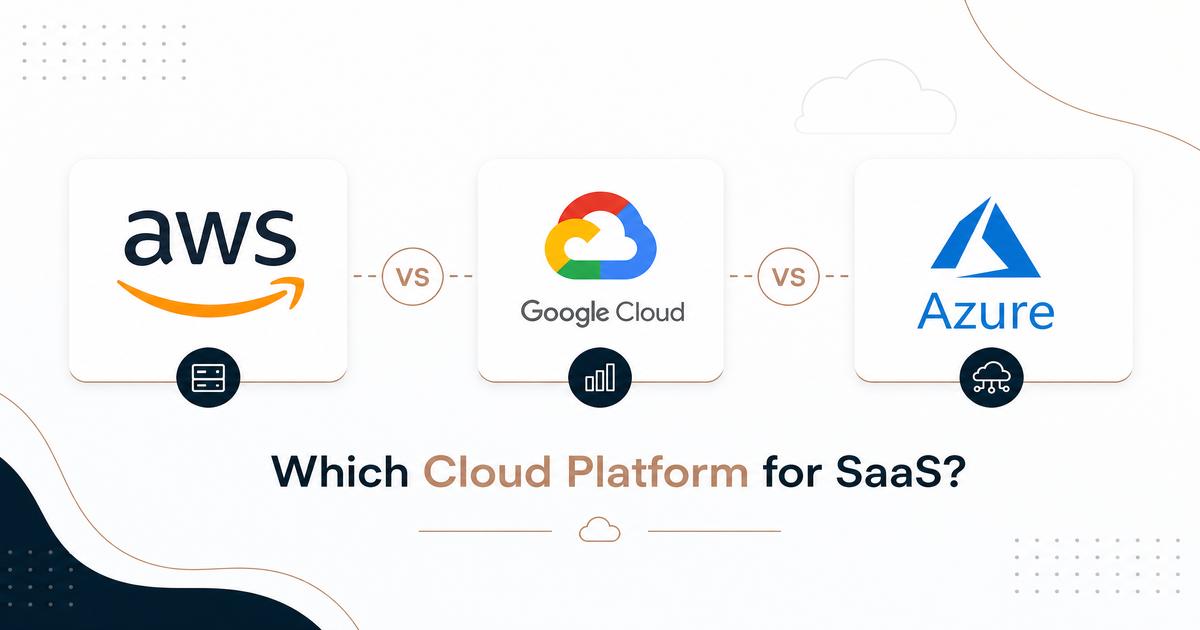
AWS vs. Google Cloud vs. Azure: Which Cloud Platform for SaaS?
In today’s rapidly evolving digital landscape, Software as a Service (SaaS) has become the dominant model for delivering applications. The success of any SaaS offering hinges significantly on the underlying cloud infrastructure that powers it. Choosing the right cloud platform is not merely a technical decision; it’s a strategic one that impacts scalability, cost-efficiency, performance, security, and ultimately, the long-term viability of a SaaS business. The market is primarily dominated by three giants: Amazon Web Services (AWS), Microsoft Azure, and Google Cloud Platform (GCP). Each offers a robust suite of services, but they come with distinct philosophies, strengths, and weaknesses. This article will delve into a comprehensive comparison of AWS, Google Cloud, and Azure, evaluating them across key criteria relevant to SaaS businesses to help you make an informed decision for your next-generation SaaS infrastructure.
Understanding the Cloud Giants
Amazon Web Services (AWS)
Overview: AWS is the undisputed market leader in cloud computing, boasting the broadest and deepest set of services. Launched in 2006, it has a significant head start, leading to a mature ecosystem and a vast global infrastructure. AWS offers an unparalleled array of services, from compute and storage to advanced machine learning and IoT capabilities.
Key Strengths for SaaS:
* Extensive Service Portfolio: AWS provides the broadest and deepest set of services, covering virtually every imaginable need for a SaaS application, including compute (EC2, Lambda), storage (S3, EBS), databases (RDS, DynamoDB, Aurora), networking, analytics, machine learning, and security. This breadth allows SaaS providers to build highly complex and specialized applications entirely within the AWS ecosystem.
* Mature Ecosystem and Community: With its long-standing presence, AWS has cultivated a massive community of developers, extensive documentation, numerous third-party tools, and a robust partner network. This translates to abundant resources for troubleshooting, development, and integration.
* Scalability and Reliability: AWS is renowned for its ability to scale applications to handle immense traffic and data volumes, offering high availability and fault tolerance across its global regions and availability zones.
* Security and Compliance: AWS offers a comprehensive suite of security tools (IAM, Security Hub, GuardDuty) and holds numerous compliance certifications, making it suitable for SaaS applications with stringent regulatory requirements.
Potential Drawbacks for SaaS:
* Complexity: The sheer volume of services and configuration options can be overwhelming, leading to a steep learning curve for new teams or those without dedicated cloud expertise.
* Cost Optimization: While offering flexible pay-as-you-go pricing, optimizing costs on AWS can be challenging. Without careful management, expenses can quickly escalate, requiring specialized knowledge to leverage reserved instances, savings plans, and other cost-saving mechanisms.
* Vendor Lock-in Concerns: The deep integration and proprietary nature of some AWS services can lead to vendor lock-in, making it difficult to migrate to another cloud provider in the future.
Microsoft Azure
Overview: Microsoft Azure, launched in 2010, is a strong contender, particularly appealing to enterprises with existing investments in Microsoft technologies. It offers a comprehensive suite of cloud services, with a strong emphasis on hybrid cloud capabilities and enterprise-grade solutions.
Key Strengths for SaaS:
* Enterprise Integration: Azure offers deep integration with Microsoft’s ecosystem, including Windows Server, SQL Server, .NET, and Active Directory. This makes it a natural choice for SaaS companies already leveraging Microsoft products, simplifying migration and management.
* Hybrid Cloud Solutions: Azure excels in hybrid cloud scenarios with offerings like Azure Stack, allowing businesses to seamlessly extend their on-premises infrastructure to the cloud. This is crucial for SaaS providers needing to maintain certain workloads on-premises due to data residency or performance requirements.
* Compliance and Governance: Azure provides extensive compliance certifications and robust governance tools, catering to highly regulated industries and large enterprises with complex compliance needs.
* Developer Tools: Azure DevOps offers a comprehensive set of developer tools for CI/CD, project management, and code repositories, fostering a streamlined development workflow.
Potential Drawbacks for SaaS:
* Pricing Complexity: Similar to AWS, Azure’s pricing model can be intricate, with various options and discounts that require careful analysis to optimize costs.
* Ecosystem Maturity: While rapidly expanding, some areas of Azure’s ecosystem might be considered less mature or have fewer third-party integrations compared to AWS.
* Learning Curve for Non-Microsoft Users: Teams primarily working outside the Microsoft stack might face a learning curve when adopting Azure’s specific tools and paradigms.
Google Cloud Platform (GCP)
Overview: Google Cloud Platform, while having a smaller market share than AWS and Azure, is a rapidly growing player known for its innovation, strong data analytics capabilities, and open-source friendly approach. It leverages Google’s global infrastructure and expertise in areas like AI/ML.
Key Strengths for SaaS:
* AI/ML and Data Analytics: GCP is a leader in artificial intelligence and machine learning, offering powerful services like TensorFlow, Google AI Platform, and specialized APIs. Its data analytics services, such as BigQuery and Dataflow, are highly regarded for their scalability and performance, making it ideal for data-intensive SaaS applications.
* Containerization and Kubernetes: GCP is the birthplace of Kubernetes, and its Google Kubernetes Engine (GKE) is considered one of the best managed Kubernetes services. This makes GCP an excellent choice for SaaS companies adopting containerized microservices architectures.
* Global Network Infrastructure: Leveraging Google’s extensive global network, GCP offers exceptional network performance and low latency, which is critical for globally distributed SaaS applications.
* Open-Source Friendly: GCP has a strong commitment to open-source technologies, which can appeal to developers and companies looking for flexibility and avoiding proprietary lock-in.
Potential Drawbacks for SaaS:
* Smaller Market Share and Ecosystem: Compared to AWS and Azure, GCP has a smaller market share, which can translate to a smaller community, fewer third-party integrations, and potentially fewer specialized services in certain niches.
* Enterprise Features: While growing, GCP’s enterprise features and support might be perceived as less mature than its competitors, particularly for very large, traditional enterprises.
* Service Breadth: While strong in its core areas, GCP’s overall service breadth is not as extensive as AWS, which might require SaaS providers to look for alternative solutions for highly specialized needs.
Key Comparison Criteria for SaaS Platforms
To further aid in your decision, let’s compare these platforms across critical aspects for SaaS development and operations.
Compute Services
| Feature | AWS | Azure | GCP |
|---|---|---|---|
| Virtual Machines | EC2 (Elastic Compute Cloud) | Virtual Machines | Compute Engine |
| Serverless Functions | Lambda | Azure Functions | Cloud Functions |
| Container Orchestration | ECS (Elastic Container Service), EKS (Elastic Kubernetes Service) | Azure Kubernetes Service (AKS) | Google Kubernetes Engine (GKE) |
| SaaS Relevance | Broadest range of instance types, mature serverless, robust container options. | Strong integration with Windows workloads, good serverless, competitive AKS. | Excellent GKE, strong serverless, good VM performance. |
SaaS Relevance: The choice of compute services directly impacts the scalability, performance, and cost of your SaaS application. AWS offers the most diverse range of instance types, while GCP excels in Kubernetes orchestration. Azure provides strong options for Windows-based workloads and hybrid environments.
Storage Solutions
| Feature | AWS | Azure | GCP |
|---|---|---|---|
| Object Storage | S3 (Simple Storage Service) | Blob Storage | Cloud Storage |
| Block Storage | EBS (Elastic Block Store) | Disk Storage | Persistent Disk |
| Archival Storage | Glacier | Azure Archive Storage | Coldline, Archive |
| Managed Relational DB | RDS (Relational Database Service), Aurora | Azure SQL Database, PostgreSQL, MySQL | Cloud SQL, Spanner |
| NoSQL Databases | DynamoDB, DocumentDB | Cosmos DB, Table Storage | Firestore, Bigtable |
| SaaS Relevance | Highly scalable, durable, and cost-effective object storage (S3), diverse database options. | Comprehensive storage options, Cosmos DB for global distribution. | Cost-effective object storage, strong NoSQL (Firestore, Bigtable), Spanner for global consistency. |
SaaS Relevance: Data storage is fundamental for any SaaS. AWS S3 is an industry standard for object storage, offering extreme durability. Azure’s Cosmos DB provides globally distributed, multi-model database capabilities. GCP’s Bigtable and Spanner are excellent for high-performance, globally consistent data needs.
Networking and Content Delivery
| Feature | AWS | Azure | GCP |
|---|---|---|---|
| Virtual Private Cloud | VPC (Virtual Private Cloud) | Virtual Network | VPC (Virtual Private Cloud) |
| DNS Service | Route 53 | Azure DNS | Cloud DNS |
| Content Delivery Network | CloudFront | Azure CDN | Cloud CDN |
| Load Balancing | ELB (Elastic Load Balancing) | Azure Load Balancer, Application Gateway | Cloud Load Balancing |
| SaaS Relevance | Robust networking, global CDN, highly scalable DNS. | Strong hybrid networking, good CDN. | Excellent global network, high-performance CDN, advanced load balancing. |
SaaS Relevance: Efficient networking and content delivery are crucial for a responsive SaaS application. GCP’s global network infrastructure often provides superior performance for geographically dispersed users. All three offer robust CDN services to accelerate content delivery.
Database Services
SaaS Relevance: The choice of database impacts performance, scalability, and data management. AWS offers a wide array of managed relational and NoSQL databases, including its proprietary Aurora. Azure’s Cosmos DB is a standout for its global distribution and multi-model support. GCP’s Cloud SQL provides managed instances of popular open-source databases, while Spanner offers unique global consistency.
Security and Compliance
| Feature | AWS | Azure | GCP |
|---|---|---|---|
| Identity & Access Management | IAM (Identity and Access Management) | Azure Active Directory | Cloud IAM |
| Security Monitoring | Security Hub, GuardDuty | Security Center, Azure Sentinel | Security Command Center |
| Compliance Certifications | Extensive (HIPAA, PCI DSS, ISO, SOC) | Broad (HIPAA, PCI DSS, ISO, SOC, GDPR) | Extensive (HIPAA, PCI DSS, ISO, SOC, GDPR) |
| SaaS Relevance | Comprehensive security tools, strong compliance posture. | Deep integration with enterprise identity, robust compliance. | Strong security analytics, good compliance. |
SaaS Relevance: Security is paramount for SaaS providers. All three platforms offer robust security features and extensive compliance certifications. Azure’s integration with Active Directory is a significant advantage for enterprises. AWS and GCP also provide advanced threat detection and identity management.
Pricing Models and Cost Management
SaaS Relevance: Understanding and managing cloud costs is vital. All three offer pay-as-you-go models, but their discount structures vary. AWS and Azure have complex pricing, often requiring significant expertise to optimize. GCP is known for its per-second billing and sustained use discounts, which can be more predictable for certain workloads. Tools for cost management are available across all platforms, but their effectiveness depends on proper implementation.
Developer Tools and Ecosystem
SaaS Relevance: A strong developer ecosystem and integrated tools streamline the development and deployment process. AWS offers a mature set of SDKs, CLIs, and infrastructure-as-code tools. Azure DevOps provides a comprehensive suite for the entire development lifecycle. GCP’s focus on Kubernetes and open-source tools appeals to modern development practices.
Choosing the Right Platform for Your SaaS
Making the final decision requires a careful evaluation of your specific business needs, technical requirements, and long-term strategy.
When to Choose AWS
Choose AWS if your SaaS requires the broadest range of services and maximum flexibility. It’s ideal for companies that need to build highly customized, complex applications and can dedicate resources to managing its extensive ecosystem. If you prioritize a mature platform with a vast community, extensive documentation, and a global footprint, AWS is an excellent choice. It’s particularly well-suited for enterprises that need cutting-edge services and are willing to invest in cloud expertise for cost optimization.
When to Choose Azure
Opt for Azure if your SaaS has an existing investment in Microsoft technologies or requires strong hybrid cloud capabilities. Azure is a natural fit for businesses that rely heavily on Windows-based applications, SQL Server, or Active Directory. Its robust compliance offerings and enterprise-grade security make it a strong contender for SaaS providers in highly regulated industries. If seamless integration with Microsoft tools and a focus on hybrid environments are critical, Azure stands out.
When to Choose GCP
Consider GCP if your SaaS prioritizes innovation, AI/ML, and data analytics capabilities, or if you are building a containerized, microservices-based application. GCP’s strengths in Kubernetes, advanced data processing (BigQuery), and machine learning make it an attractive option for modern, data-driven SaaS solutions. If you value an open-source friendly environment, exceptional global network performance, and potentially more predictable pricing for specific workloads, GCP could be your ideal platform.
Conclusion
The choice between AWS, Google Cloud, and Azure for your SaaS platform is not a one-size-fits-all decision. Each cloud provider brings unique strengths to the table. AWS offers unparalleled breadth and maturity, Azure provides deep enterprise integration and hybrid cloud solutions, and GCP excels in innovation, data analytics, and containerization.
Ultimately, the best cloud platform for your SaaS will depend on several factors: your existing technology stack, budget constraints, scalability requirements, data strategy, regulatory compliance needs, and the expertise of your development team. It’s crucial to conduct a thorough assessment of your specific use cases and potentially even explore a multi-cloud strategy to leverage the best features of each platform.
Ready to elevate your SaaS? Explore SaaSSync Pro for in-depth reviews and comparisons of cloud services, helping you navigate the complexities of cloud infrastructure and make the most informed decision for your business.