How to Streamline Employee Onboarding with HR Software
Introduction
Effective employee onboarding is more than just a formality; it’s a critical process that sets the tone for a new hire’s entire tenure with a company. A well-structured onboarding experience can significantly impact employee retention, productivity, and overall job satisfaction. Conversely, a disjointed or overwhelming onboarding process can lead to early disengagement, confusion, and even premature departures. In today’s fast-paced business environment, organizations are increasingly turning to technology to enhance their human resources functions. HR software, in particular, has emerged as a powerful tool for transforming the traditionally cumbersome onboarding journey into a streamlined, efficient, and engaging experience. This guide will provide practical, step-by-step advice on leveraging HR software to optimize employee onboarding, ensuring a positive and productive start for every new team member.
Understanding the Challenges of Traditional Onboarding
For many years, employee onboarding has been characterized by a series of manual, paper-based tasks that are often inefficient and prone to errors. This traditional approach presents several significant challenges:
- Manual Paperwork and Administrative Burden: New hires are often inundated with stacks of forms, contracts, and policy documents. This creates a substantial administrative burden for HR teams, who must manage, track, and file these documents, often leading to delays and potential compliance issues.
- Inconsistent New Hire Experience: Without a standardized digital platform, the onboarding experience can vary greatly depending on the department, manager, or even the HR representative involved. This inconsistency can lead to confusion, missed information, and a perception of disorganization among new employees.
- Lack of Integration with Other Systems: Traditional onboarding often operates in silos, disconnected from other vital company systems such as IT provisioning, payroll, and learning management. This lack of integration necessitates manual data entry across multiple platforms, increasing the risk of errors and consuming valuable time.
- Time-Consuming for HR and Managers: The manual coordination of schedules, training, and introductions, along with the constant need to answer repetitive questions, consumes a significant amount of time for both HR professionals and hiring managers, diverting them from more strategic tasks.
- High Turnover Rates Due to Poor Onboarding: Studies consistently show a strong correlation between effective onboarding and employee retention. A poor onboarding experience can leave new hires feeling unsupported, undervalued, and unprepared, significantly increasing the likelihood of them seeking opportunities elsewhere within the first few months.
Key Benefits of Using HR Software for Onboarding
Implementing HR software specifically designed to support onboarding processes can mitigate these challenges and unlock a multitude of benefits for both the organization and its new employees:
- Automation of Routine Tasks: HR software automates repetitive administrative tasks such as document distribution, form completion, and data entry. This frees up HR staff to focus on more strategic initiatives and personalized support for new hires.
- Centralized Data Management: All new hire information, from personal details to signed documents and training progress, is stored in a single, secure, and easily accessible digital location. This eliminates data silos, improves data accuracy, and simplifies reporting.
- Improved Compliance and Security: HR software helps ensure compliance with labor laws and company policies by standardizing processes and maintaining digital records. Robust security features protect sensitive employee data, reducing the risk of breaches.
- Enhanced New Hire Experience: A structured, digital onboarding journey provides new employees with a consistent, engaging, and supportive introduction to the company. They can access necessary information, complete tasks, and connect with colleagues seamlessly, fostering a sense of belonging from day one.
- Reduced Time-to-Productivity: By providing new hires with immediate access to essential tools, training, and information, HR software accelerates their understanding of their roles and responsibilities, enabling them to become productive members of the team much faster.
- Better Analytics and Reporting: HR software offers powerful analytics capabilities, allowing organizations to track onboarding progress, identify bottlenecks, and measure the effectiveness of their programs. This data-driven insight enables continuous improvement of the onboarding process.
Step-by-Step Guide: Streamlining Employee Onboarding with HR Software
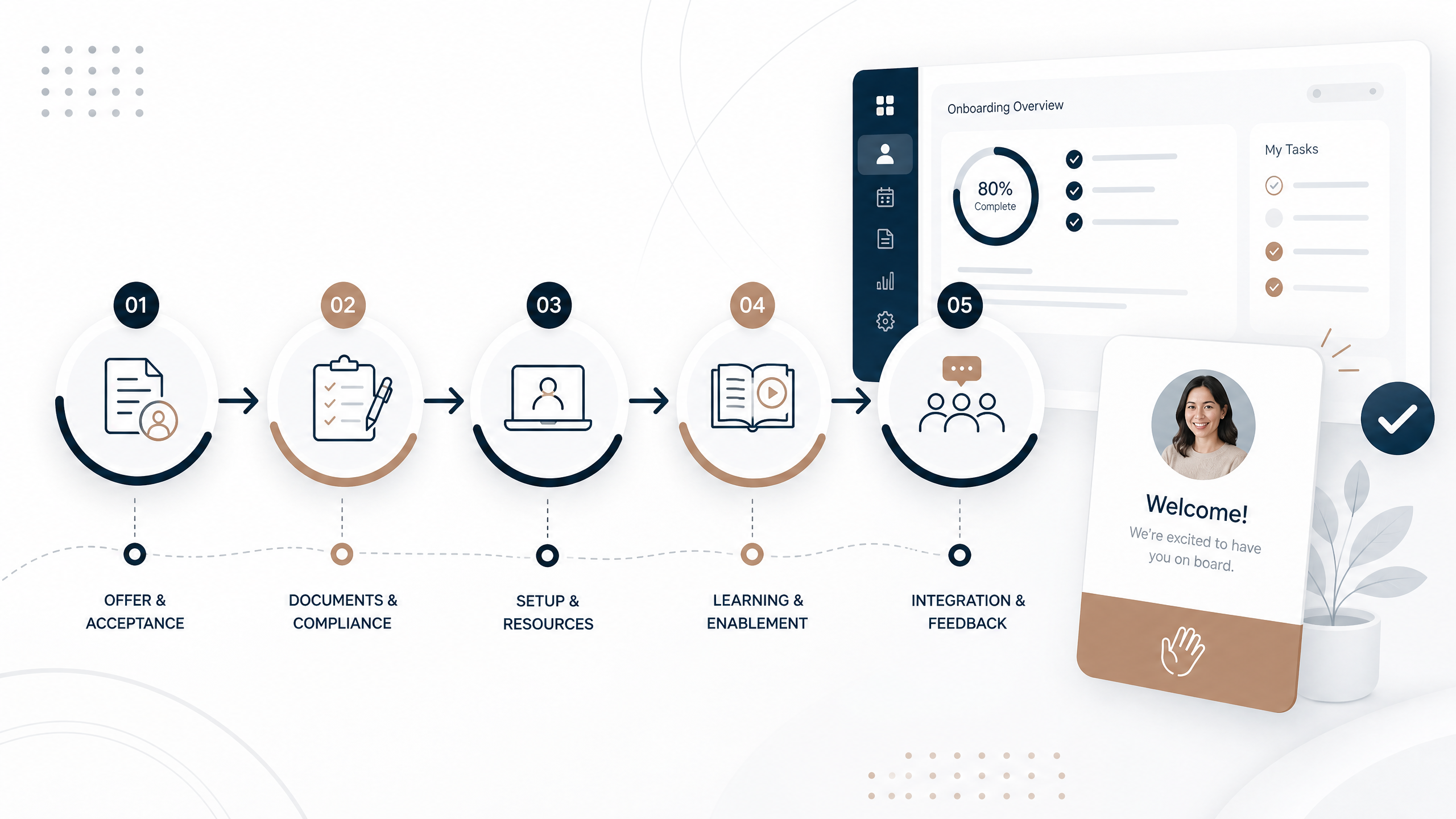
To effectively leverage HR software for employee onboarding, a strategic, phased approach is essential. Here’s a step-by-step guide:
Step 4.1: Pre-boarding – Setting the Stage for Success
Pre-boarding begins the moment a candidate accepts a job offer and extends until their first day. This phase is crucial for building excitement and ensuring a smooth transition.
- Automate Document Distribution and Collection: Utilize HR software to digitally send offer letters, employment contracts, tax forms, and other necessary paperwork. New hires can complete and sign these documents electronically, eliminating the need for physical copies and reducing administrative overhead. The system can also track completion status, sending automated reminders as needed.
- Welcome Kits and Initial Communications: Configure the HR software to deliver personalized welcome messages, company handbooks, organizational charts, and introductory videos. This helps new hires familiarize themselves with the company culture, values, and key personnel before they even start. Automated email sequences can provide useful information about their first day, dress code, and what to expect.
- System Access and Account Setup: Integrate HR software with IT systems to automate the provisioning of necessary accounts and access. This includes setting up email addresses, internal communication tools (e.g., Slack, Microsoft Teams), project management software, and any other role-specific applications. Ensuring these are ready on day one prevents delays and frustration.
Step 4.2: Day One – Making a Great First Impression
The first day is a pivotal moment. HR software can help make it memorable and productive.
- Digital Check-in and Orientation: Instead of a manual check-in, new hires can complete their arrival process digitally through the HR portal. The software can also host virtual tours of the office, provide essential information about facilities, and guide them through a digital orientation module covering company policies and procedures.
- Task Assignment and Tracking: Managers can use the HR software to assign and track first-day tasks, such as meeting their team, setting up their workstation, or completing initial training modules. This ensures a structured first day and provides clarity on immediate priorities.
- Buddy/Mentor Program Integration: If your company has a buddy or mentor program, the HR software can facilitate the assignment of mentors and provide resources for both the new hire and the mentor. It can also track initial meetings and check-ins to ensure the program is effective.
Step 4.3: First Week/Month – Integration and Engagement
The initial weeks are vital for integrating new hires into the team and ensuring they feel supported.
- Training and Development Modules: HR software often includes or integrates with learning management systems (LMS). Use this to assign mandatory compliance training, role-specific skill development courses, and company culture workshops. The system can track progress and completion, ensuring all necessary training is undertaken.
- Performance Goal Setting and Tracking: Managers can utilize the software to collaboratively set initial performance goals with new hires. Regular check-ins and feedback sessions can be scheduled and documented within the system, providing a clear roadmap for success and fostering early engagement.
- Feedback Mechanisms: Implement automated surveys and check-ins through the HR software to gather feedback from new hires about their onboarding experience. This valuable insight allows HR and management to identify areas for improvement and make real-time adjustments to the process.
Step 4.4: Ongoing Support and Development
Onboarding is not a one-time event but an ongoing process of integration and development.
- Continuous Learning Platforms: Provide access to a library of resources, online courses, and professional development opportunities through the HR software. This encourages continuous learning and skill enhancement, supporting long-term career growth within the company.
- Performance Management Integration: Seamlessly transition from initial goal setting to ongoing performance reviews and career pathing within the HR software. This ensures that performance discussions are regular, documented, and aligned with company objectives.
- Employee Self-Service Portals: Empower employees with self-service capabilities through the HR portal. They should be able to access their personal information, benefits details, pay stubs, and company policies independently, reducing inquiries to HR and fostering autonomy.
Choosing the Right HR Software for Onboarding
Selecting the appropriate HR software is paramount to the success of your onboarding strategy. Consider the following factors:
- Scalability and Integration Capabilities: Choose a solution that can grow with your company and seamlessly integrate with your existing payroll, IT, and other essential business systems. Robust API capabilities are a significant advantage.
- User-Friendliness for Both HR and Employees: The software should have an intuitive interface that is easy for HR professionals to configure and manage, and equally straightforward for new hires to navigate and use. A poor user experience will hinder adoption.
- Customization Options: Look for software that allows you to tailor workflows, documents, and communication templates to match your company’s unique branding, culture, and specific onboarding requirements.
- Security and Compliance Features: Ensure the software adheres to industry-standard security protocols (e.g., GDPR, ISO 27001) and provides features that aid in compliance, such as audit trails, data encryption, and role-based access controls.
- Cost-Effectiveness and Support: Evaluate the total cost of ownership, including licensing fees, implementation costs, and ongoing support. Assess the vendor’s customer support reputation and the availability of training resources.
Best Practices for Implementation and Adoption
Even the best HR software won’t deliver results without a thoughtful implementation and adoption strategy:
- Phased Rollout: Instead of a big-bang approach, consider a phased rollout, starting with a pilot group or a specific department. This allows for testing, gathering feedback, and making adjustments before a company-wide launch.
- Comprehensive Training for HR and Managers: Provide thorough training to all HR staff and hiring managers on how to effectively use the new software. Emphasize its benefits and how it streamlines their daily tasks.
- Gathering Feedback and Iterating: Continuously solicit feedback from new hires, HR, and managers. Use this feedback to identify areas for improvement and iterate on your onboarding processes and software configuration.
- Communicating Benefits to All Stakeholders: Clearly communicate the advantages of the new HR software to all employees, explaining how it will enhance the onboarding experience and contribute to a more efficient and supportive work environment.
Conclusion
Streamlining employee onboarding with HR software is no longer a luxury but a strategic imperative for modern organizations. By automating administrative tasks, centralizing information, and providing a consistent, engaging experience, HR software transforms onboarding from a bureaucratic hurdle into a powerful tool for talent retention and productivity. From pre-boarding preparations to ongoing development, the right software empowers companies to make a lasting positive impression on their new hires, fostering engagement, accelerating productivity, and ultimately contributing to long-term organizational success. Embrace the power of HR software to create an onboarding journey that truly sets your employees – and your company – up for success. Explore the various HR software solutions available today to find the perfect fit for your organization’s unique needs and embark on a journey towards a more efficient, compliant, and human-centric onboarding process.